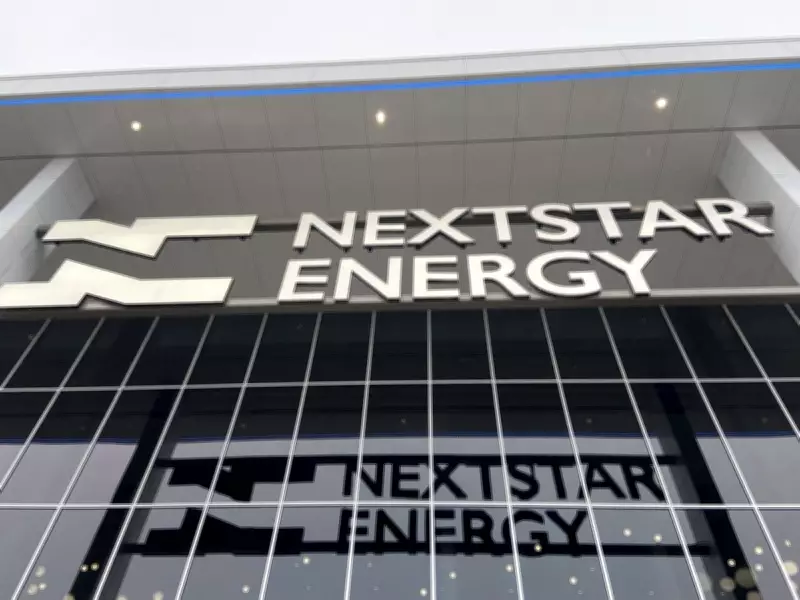
Ontario Premier Doug Ford declared a significant milestone for the province as Windsor's massive NextStar Energy battery manufacturing facility officially opened its doors on Thursday, March 5, 2026. The premier emphasized that this development represents a transformative moment for southwestern Ontario, generating thousands of local employment opportunities while strengthening workers across the automotive and advanced manufacturing supply chains throughout the region.
A $6-Billion Investment in Canadian Electrification
NextStar Energy Inc., a joint venture representing a $6-billion investment, celebrated its grand opening with dignitaries including Premier Ford and Canada's industry minister in attendance. The facility, spanning an impressive 4.23 million square feet, is positioned to employ approximately 2,500 workers once fully operational, marking Canada's first large-scale battery manufacturing plant of this magnitude.
Danies Lee, CEO of NextStar Energy, stated that the plant fulfills a critical role in powering the nation's next chapter of electrification. "With strong investment from the federal and provincial governments and the commitments from our founding joint venture partners, we are proud to be creating long-term economic value for Canada," Lee announced during the opening ceremonies.

Lee further explained that the facility helps power the next generation of energy that will future-proof Canadian industry at scale. "This is a unique, made-in-Canada success story and one we can all be proud of," he added, highlighting the economic momentum the company is building in the border city of Windsor.
Inside the Battery Manufacturing Process
During the grand opening event, media representatives received a comprehensive tour of the advanced manufacturing facility after donning full personal protective equipment. Brett Hillock, chief operations officer of NextStar Energy, guided participants through the sophisticated battery production process that transforms raw materials into finished active battery cells.
The manufacturing sequence involves several precise stages:
- Lamination and Stacking: Machines operating inside large glass cases laminate and stack battery components with perfect uniformity
- Cutting Process: Specialized equipment cuts each cell to exact specifications
- Packaging and Activation: Stacked cells enter a packaging area where electrolyte is added to activate the batteries
- Aging and Testing: Batteries age for up to two weeks and undergo multiple quality assessments before shipping
The finished product emerges as a rectangular battery measuring just over one foot in length and approximately one inch in thickness, ready for integration into electric vehicles and other applications.
Advanced Quality Control and Production Capacity
Hillock detailed the plant's sophisticated quality assurance systems, which include eight quality control laboratories operating continuously around the clock. These facilities take samples at every production stage to ensure consistent quality standards are maintained throughout the manufacturing process.
The manufacturing environment is maintained at precisely one percent humidity to prevent moisture from compromising battery performance. "On a good day, the plant produces 40,000 battery cells," Hillock revealed, noting the facility's substantial production capacity.
Currently operating with two packaging lines and five lithium iron phosphate (LFP) production lines, the plant continues to scale its operations. Hillock explained that this redundancy provides operational flexibility, allowing production to continue on other lines if one requires temporary stoppage for quality control adjustments.
Production lines feature live video monitoring systems that continuously review manufacturing processes for quality assurance purposes. This technological integration represents the advanced nature of the facility that Premier Ford described as reflecting the economic momentum building in southwestern Ontario's manufacturing sector.