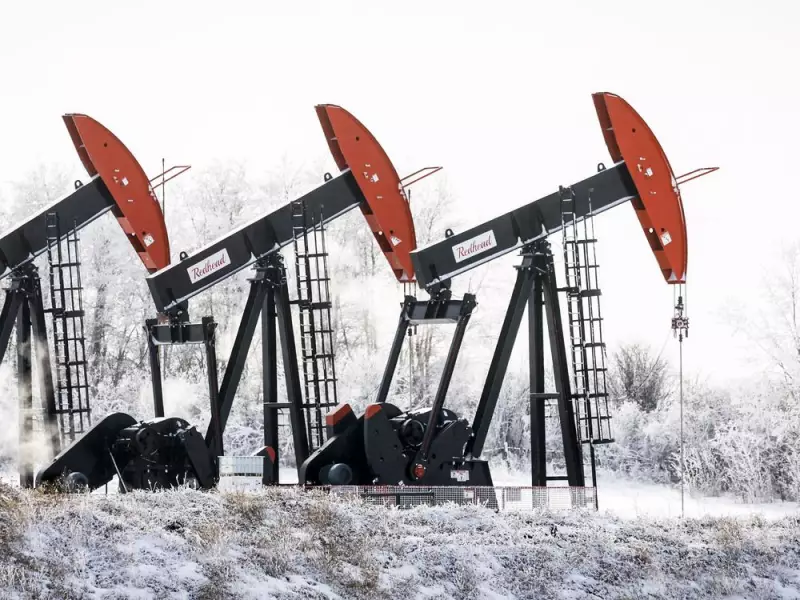
A new forecast from Deloitte warns that global oil markets are heading for their most significant oversupply since the COVID-19 pandemic, setting the stage for continued price weakness through 2026. The consultancy firm points to a persistent imbalance where production continues to outpace demand, creating a substantial surplus that is expected to keep a lid on crude values.
Production Outstrips Demand, Creating a Major Surplus
Global crude prices experienced a sharp decline in 2025 as rising output from several key producers overwhelmed global consumption. Increased production from the United States, Canada, Brazil, Guyana, and OPEC+ nations collectively pushed more barrels into the market than the world needed.
"The oversupply is real, and while demand and economies are waking up and moving forward, they’re not moving forward at the robust rates that we might hope," said Andrew Botterill, a partner at Deloitte Canada and the lead author of the report. The firm estimates the current oversupply at about three million barrels per day, a glut that is applying significant downward pressure, particularly in the first half of 2026.

Geopolitical Risks Blunted by Market Fundamentals
Interestingly, the usual price-supporting effect of geopolitical turmoil appears to be muted by the sheer volume of available crude. Even events like the recent surprise ouster of Venezuela's Nicolás Maduro, which rattled Canadian energy stocks, have had a limited impact on the overall price trajectory.
Botterill noted that the lifting of sanctions on Venezuelan oil could have longer-term implications, especially for the pricing of rival heavy crude barrels from countries like Canada and Mexico. "I think it will absolutely change what long term investments look like for especially heavy-oil-producing countries like Canada," he stated.
Deloitte's price outlook reflects this challenging environment. The firm forecasts the U.S. benchmark, West Texas Intermediate (WTI), to average approximately US$58 per barrel over the next twelve months. This is down from an average of US$65.58 in 2025. For Canada's benchmark heavy crude, Western Canadian Select (WCS), the forecast is for an average price in the low CAD$60s per barrel.
A Silver Lining for Canadian Natural Gas
While the oil picture appears cloudy, Deloitte identifies a relative bright spot for the Canadian energy sector: natural gas. The firm anticipates stronger natural gas prices as burgeoning liquefied natural gas (LNG) export capacity begins to tighten North American supply.
Canada's own rising LNG export projects are expected to absorb the domestic oversupply that severely depressed prices in Western Canada during the summer of 2025. Deloitte forecasts that prices for AECO, Western Canada's key natural gas benchmark, could average around $3 per thousand cubic feet in 2026, a substantial increase from the 2025 average of $1.72.
"We would expect to see way more growth on the natural gas side from a macro perspective than we would see from oil," Botterill explained, citing expanding LNG exports, the replacement of coal in power generation, and rising electricity demand from data centers as key growth drivers.
The report underscores a diverging path for Canada's energy commodities, with oil facing headwinds from a global surplus while natural gas stands to benefit from new market dynamics and export infrastructure.