Oil Prices Rebound in Volatile Session Ahead of Trump's Iran War Speech
Oil prices experienced a dramatic recovery during a highly volatile trading session, with market focus intensifying on an upcoming address by U.S. President Donald Trump regarding the potential conclusion of the war in Iran. Brent crude, the global benchmark, earlier plunged below the critical threshold of US$100 per barrel, at one point slumping more than 5%, before staging a significant rebound to trade near US$103.
Market Volatility and Presidential Announcements
President Trump informed reporters that the United States might withdraw from Iran within two to three weeks, suggesting that an agreement with Tehran could be reached, though he emphasized it is not a prerequisite for ending the conflict. The president is scheduled to deliver a national address at 9 p.m. Eastern time on Wednesday, which traders are closely monitoring for signals on geopolitical stability.
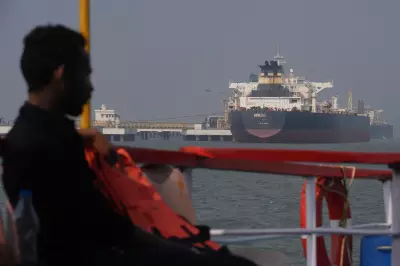
Crude prices remain approximately 40% higher than pre-March levels, as the ongoing war continues to severely restrict oil flows through the Strait of Hormuz. This vital waterway facilitates about one-fifth of the world's oil supply, and the International Energy Agency has labeled the disruption as the most significant supply shock in history. Consequently, prices for certain fuels have occasionally surged above US$200 a barrel.

Geopolitical Uncertainties and Supply Concerns
The surge in market volatility has rendered intraday trading increasingly choppy, forcing many traders to reduce their position sizes due to heightened risks. In the event of a U.S. withdrawal, it remains unclear how quickly traffic through the Strait of Hormuz could resume, if at all. President Trump has repeatedly indicated that U.S. allies would need to assist in securing the strait, while any potential increases in regional energy output would require considerable time to materialize.
Trump has frequently alternated between asserting that a deal with Iran is imminent and warning of readiness to escalate military operations. The deployment of a third U.S. aircraft carrier strike group to the Middle East underscores the possibility of further escalation, adding to market jitters.
Economic Impacts and Global Responses
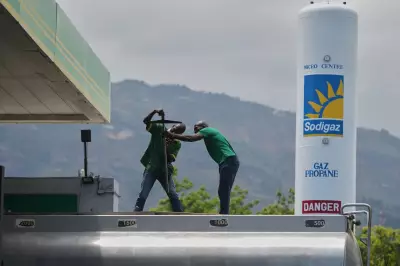
The sharp rise in energy prices, driven by the near-halt of traffic through Hormuz, has sparked fears of a renewed inflation crisis. In the United States, retail gasoline prices this week exceeded US$4 per gallon for the first time since August 2022, likely increasing political pressure on the Trump administration.
U.S. officials have not explicitly identified their interlocutors in Iran. Iranian Foreign Minister Abbas Araghchi stated via Al Jazeera that he has received messages from the U.S. Middle East envoy but confirmed no formal negotiations are underway. Tehran has outlined conditions, including maintaining sovereignty over the Strait of Hormuz, which must be met for any resolution.
Despite Trump's rough timeline for ending the war, he indicated that other nations should resolve issues related to the strait, remarking, "We'll leave because there's no reason for us to do this." Meanwhile, The Wall Street Journal reported that the United Arab Emirates has urged the U.S. and military powers in Europe and Asia to form a coalition to forcibly reopen the waterway. China and Pakistan jointly called for an immediate ceasefire and the safeguarding of shipping lanes.
Ongoing Tensions and Market Outlook
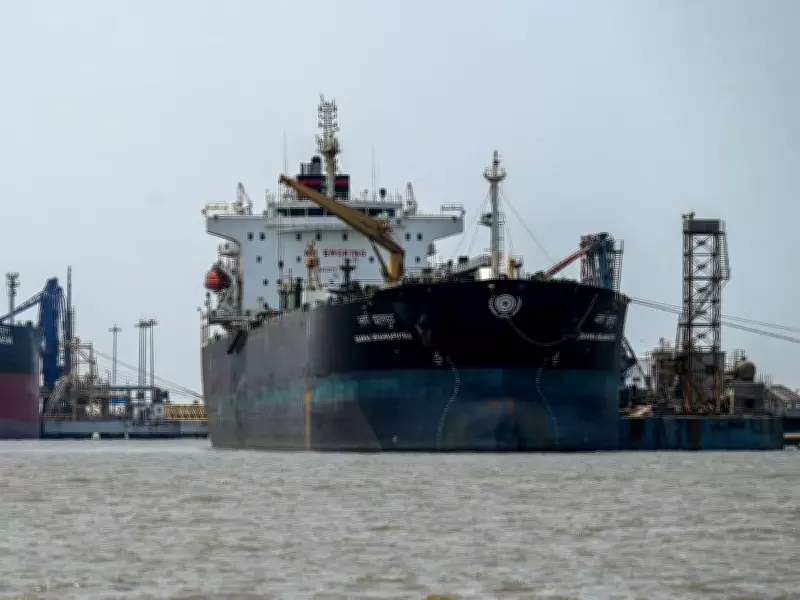
Amid the flurry of optimism over potential de-escalation, attacks persisted on Wednesday, with an oil tanker struck near Qatar. A U.K. naval group reported that the incident caused a fire, which was eventually extinguished without any environmental damage. Analysts like Giovanni Staunovo, a commodity analyst at UBS Group AG, caution that "flows and actions matter more than words," highlighting the market's sensitivity to tangible developments.
As traders brace for further volatility, the outcome of Trump's speech and subsequent geopolitical moves will likely dictate oil price trends in the coming days, with global economic stability hanging in the balance.