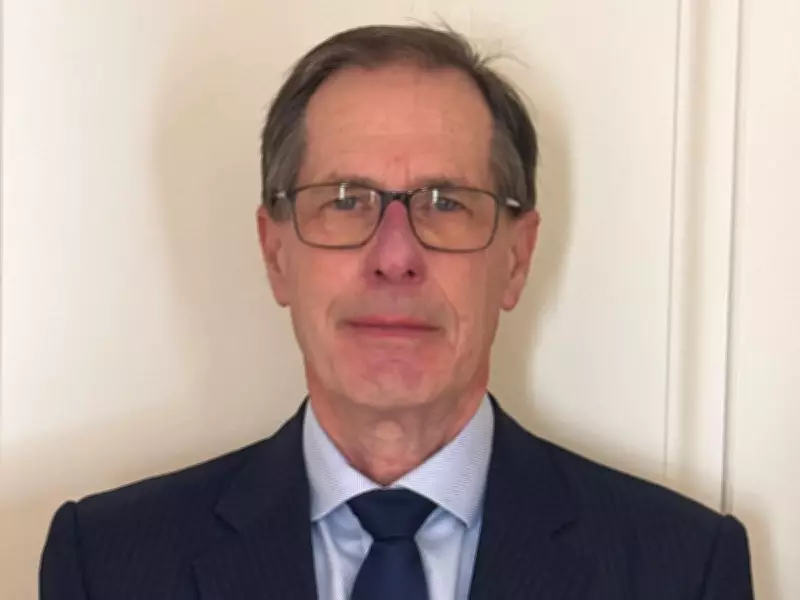
Veteran oil executive Bryan Gould is breaking ranks with industry silence to publicly challenge Canada's current energy policy direction. The founder of Aspenleaf Energy and former Shell Canada mergers and acquisitions specialist contends that the federal government's approach is fundamentally flawed and that only free market principles can properly address the nation's energy challenges.
The Public Critique Few Dare to Voice
"Everyone wants to say this at the Petroleum Club, but no one wants to say it in public," Gould reveals, highlighting the tension between private industry concerns and public discourse. With decades of experience in Canada's energy sector, including involvement in $30 billion worth of transactions at Shell Canada, Gould brings substantial credibility to his critique of current policy frameworks.
Questioning Carbon Capture Mandates
Gould specifically targets the federal government's insistence on carbon capture projects as prerequisites for new pipeline approvals. "The customer won't pay for it, and the investor can't — and won't. So it's on the taxpayer," he states bluntly, characterizing such requirements as "virtue signalling" rather than practical policy.

He points to the Pathways carbon capture and storage project, whose first phase carries a staggering $16.5 billion price tag. This comes at a time when global energy markets remain volatile, with Brent crude oil prices fluctuating around $100 per barrel and traditional energy security concerns resurfacing alongside climate discussions.
Contrasting Public Optimism with Private Concerns
The critique emerges against a backdrop of official optimism from Canadian energy officials. At the recent CERAWeek 2026 energy conference in Houston, Energy Minister Tim Hodgson enthusiastically declared "Canada is back!" while promoting ambitious energy policies and touting what he described as "the biggest carbon capture project in the world."
However, Gould suggests this public confidence masks private industry skepticism. "Behind closed doors, though, insiders are grumbling," he notes, adding that even major corporate leaders express doubts about whether Ottawa will create conditions conducive to unlocking billions in new energy investments.
Proposed Policy Simplifications
Gould advocates for several specific policy changes that he believes would allow market forces to function more effectively:
- Eliminating the tanker ban, which he describes as something that could be accomplished with "a stroke of the pen"
- Implementing a revised version of Bill C-69 on impact assessments, which he says is "on the shelf, ready to go"
- Removing the carbon capture project requirement as a precondition for pipeline approvals
"Then at least you would see, in a more clean, unfiltered sense, what the market can do," he argues, suggesting that such changes would reveal true market demand and investment potential without artificial constraints.
Addressing Industry Vilification
Beyond specific policy recommendations, Gould addresses broader cultural attitudes toward the energy sector. "This vilification of the extraction of the materials that are the foundation for our society, this has to stop, right?" he questions, calling for more honest conversations about energy realities.
He emphasizes that confronting Canada's energy challenges will require "grit and determination and willpower" along with "more forthright, truthful conversations with Canadians" about the role of traditional energy resources in modern society.
Competitive Investment Landscape
Gould's perspective is informed by his extensive experience with major energy projects, including his involvement with LNG Canada — a project that took 17 years from resource acquisition to first gas production. This lengthy timeline illustrates the regulatory and approval challenges facing Canadian energy development.
"Bryan knows competition for capital is fierce," the analysis notes, highlighting how global investment dollars flow toward jurisdictions with favorable regulatory environments. His critique suggests that Canada's current approach may be hindering rather than helping the nation's energy sector competitiveness.

The veteran oilman's comments come during discussions about the so-called "grand bargain" between Alberta and Ottawa regarding pipeline memorandums of understanding. While political negotiations continue, Gould maintains that the most viable path forward involves reducing barriers and allowing market mechanisms to guide energy development decisions.