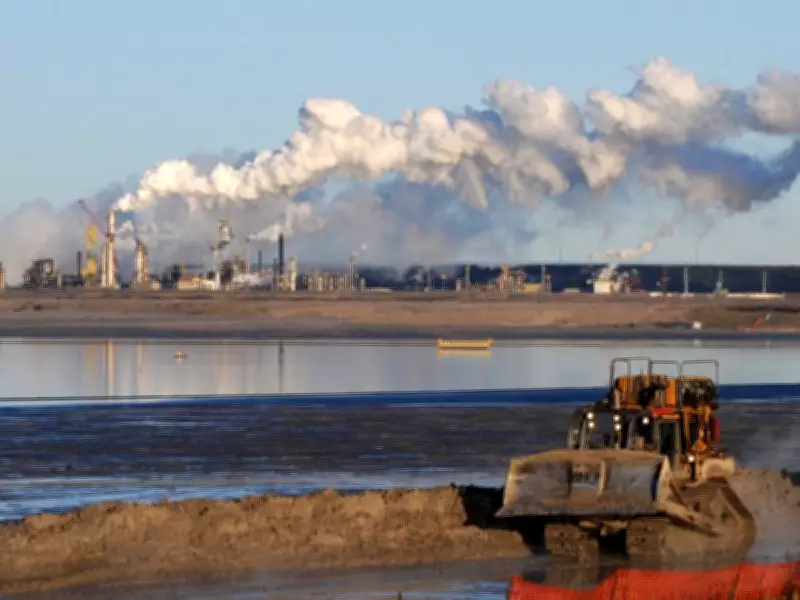
As talks over a new industrial carbon pricing deal grind on between the Carney and Smith governments, Canada's largest oilsands producers have issued a cautionary note. The outstanding issues to moving an agreement forward on the federal-provincial energy pact include setting a price for Alberta's industrial carbon and reaching an agreement between the Oil Sands Alliance on the proposed $16.5-billion Pathways carbon capture project in northern Alberta.
The memorandum of understanding (MOU) on the energy pact, reached last November, called for specific agreements on energy and environment issues to be reached by April 1. While deals to reduce methane emissions and create a joint approach to impact assessments were met, two key issues remain unresolved.
Carbon Pricing Dispute
The MOU envisioned Alberta's industrial carbon price climbing to an effective rate of $130 per tonne under the Technology, Innovation and Emissions Reduction (TIER) system. However, Alberta's industrial carbon price was frozen last year at $95 a tonne, and carbon credit prices have been trading substantially below that point. The Oil Sands Alliance, which represents five major producers including Suncor Energy, Canadian Natural Resources, and Cenovus Energy, noted that no other major exporters of heavy oil face such an industrial carbon tax, which they argue will limit the sector's ability to expand and attract investment.

Pathways Project Stalled
The MOU also required an agreement between the Oil Sands Alliance and both governments on the proposed $16.5-billion Pathways carbon capture project in northern Alberta. This project is seen as critical for reducing emissions from the oilsands, but negotiations have been prolonged.
In a statement Monday, the Oil Sands Alliance said, "Unfortunately, while both governments have taken steps toward this critical national interest objective since signing the MOU, the pace of change has been slow. We are at risk of letting this opportunity pass Canada by."
Government Responses
Federal Natural Resources Minister Tim Hodgson, speaking at a Canadian Association of Energy Contractors luncheon in Calgary, indicated talks were ongoing. "We still share a vision of how we become a clean and conventional energy superpower ... and I believe we're still looking at each other saying, 'Let's keep working,'" he said.
Sam Blackett, press secretary to Premier Danielle Smith, stated that any final agreement "must keep Alberta's energy and industrial sectors competitive and thriving on the global stage."
The delay underscores the challenges in balancing environmental goals with economic competitiveness, as the oilsands sector faces increasing pressure to decarbonize while maintaining its global market position.