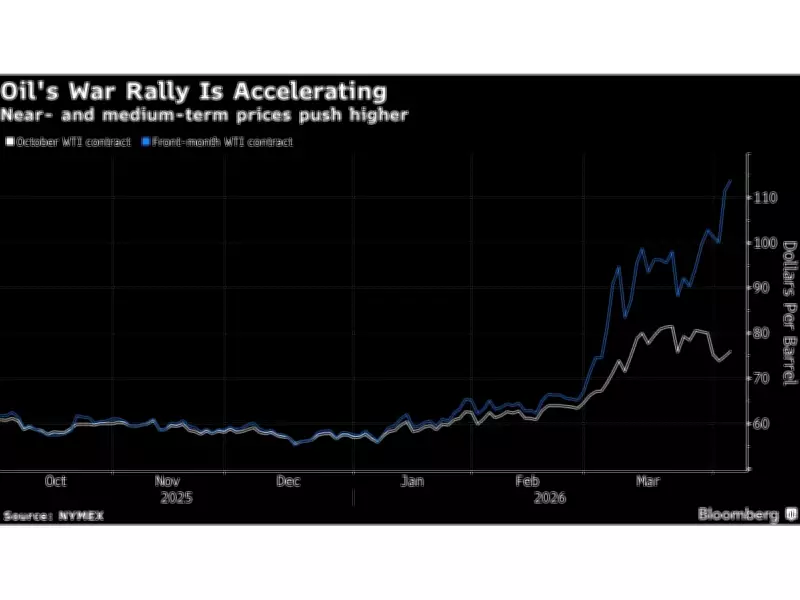
United States shale drillers are anticipated to heed President Donald Trump's call for increased oil production, but market forces rather than political pressure are driving this expected surge. The dramatic 68 percent rise in crude prices over the past five weeks, following U.S. and Israeli attacks on Iran and the subsequent disruption of vessel traffic through the critical Strait of Hormuz, has created powerful economic incentives for American oil executives to expand output.
Profitability Thresholds Exceeded
According to analysis from the Federal Reserve Bank of Dallas, shale explorers typically require oil prices between $62 and $70 per barrel to achieve profitability on new wells. As of recent trading, the U.S. benchmark has been hovering around $115, significantly surpassing these thresholds and creating ideal conditions for production increases.
Observers from diverse institutions including Citigroup Inc., Enverus Inc., and government analysts at the Energy Information Administration all point to the price rally as sufficient motivation for American oil companies to boost their output. This represents a significant shift from previous periods when management teams resisted investing in new wells despite political pressure, due to inadequate pricing conditions.

Industry Leaders Respond
Mike Sommers, chief executive of the influential industry lobby group American Petroleum Institute, confirmed this trend during a Bloomberg Television interview. "Elevated prices are certainly going to increase production in the United States," Sommers stated. "You are going to see that over the course of the next few months."
Billionaire wildcatter Harold Hamm became the first prominent shale executive to publicly commit to production increases last week when his company, Continental Resources Inc., raised both its capital budget and output targets. Even among competitors who haven't yet announced formal production boosts, hedging activity has been widespread as companies seek to lock in elevated prices for barrels they already plan to extract.
Production Timeline Considerations
Forecasters from Enverus and Rystad Energy caution that it may take several months before increased production becomes visible from major shale fields like the Permian Basin spanning West Texas and New Mexico. The lead time required for drilling, fracking, and activating new wells means the initial production boost will likely come from drilled-but-uncompleted wells, commonly known as DUCs.
Alex Ljubojevic, head of U.S. supply at Enverus, explained this dynamic: "You will definitely see operators that can, bring forward those DUCs just to get those volumes online." The complete process of drilling and bringing a new shale well into production can extend up to nine months, making the futures curve more relevant for planning than current spot prices.
Futures Market Signals
On that futures curve, West Texas Intermediate crude futures for October delivery have averaged nearly $76 since the conflict began, with prices topping $84 two weeks ago. These forward prices provide additional confidence to producers making long-term investment decisions, suggesting sustained profitability for new production coming online in the coming months.
This development marks a reversal from previous patterns where the Trump administration's repeated calls for increased domestic crude output often went unheeded. The current market disruption, described by some analysts as the most significant in oil market history, has fundamentally altered the economic calculus for shale producers, aligning political objectives with commercial incentives for the first time in recent memory.