Alberta Premier Danielle Smith has pointed to the recent capture of Venezuelan leader Nicolás Maduro as a stark reminder of global instability, arguing it underscores the urgent need for Canada to build a West Coast oil pipeline.
Geopolitical Event Highlights Energy Security Risk
Speaking in Edmonton, Premier Smith framed the detention of Maduro as a critical geopolitical event that exposes the fragility of international energy supply chains. She emphasized that reliance on oil from politically volatile regions poses a significant risk to Canada's allies.
Smith stated that this situation should serve as a wake-up call for the federal government and other provinces. She argued that Canada, and particularly Alberta, offers a stable, democratic, and environmentally responsible alternative for global energy markets. However, this advantage is nullified without the infrastructure to get resources to tidewater.

The Stalled Path to Tidewater
The Premier's comments reference the long-standing impasse over pipeline projects designed to transport Alberta oil sands crude to the British Columbia coast for export to Asian markets. Projects like the Trans Mountain expansion have faced numerous legal, regulatory, and environmental hurdles.
Smith contends that the inability to secure a West Coast outlet has cost the Canadian economy billions in lost revenue and has forced Alberta resources to be sold at a discount, primarily to the United States. The recent events in Venezuela, she suggests, provide a compelling new argument for accelerating such projects on national security and economic grounds.
Federal and Provincial Dynamics
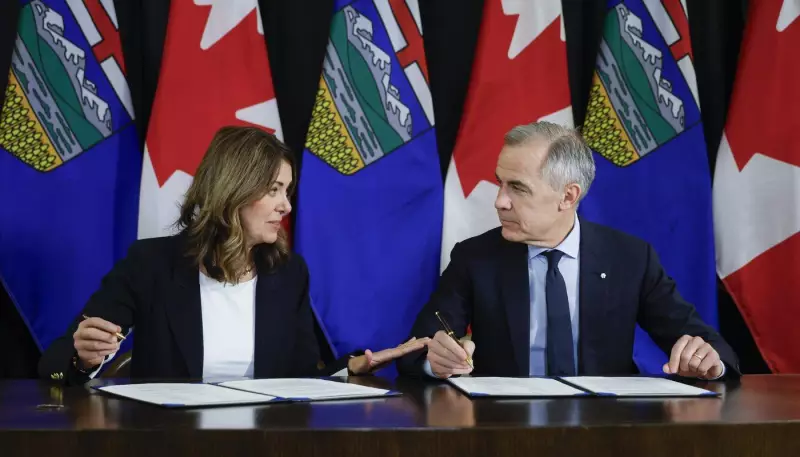
The call for action comes amid ongoing federal-provincial negotiations. Smith referenced the Memorandum of Understanding (MOU) she signed with Prime Minister Mark Carney in Calgary on November 27, 2025, which outlined a framework for cooperation on energy and economic initiatives.
While the details of that MOU were broad, Smith is now explicitly linking energy infrastructure to global security. Her argument is that Canada has a moral and economic duty to provide a reliable energy source to its partners, a duty that cannot be fulfilled without new export capacity.
The Premier's stance is likely to reignite debates over environmental assessments, Indigenous consent, and interprovincial jurisdiction. Opponents of new pipeline construction argue that investing in fossil fuel infrastructure is incompatible with climate goals and poses unacceptable risks to coastal ecosystems.
However, Smith and other proponents believe that modern pipeline technology, combined with Alberta's carbon capture and regulatory standards, presents a responsible path forward. They view the current global landscape, punctuated by events like the one in Venezuela, as an opportunity to reposition Canadian energy as a pillar of stability.