U.S. President Donald Trump is reportedly leaning toward a significant decision that would block the energy giant ExxonMobil from operating in Venezuela. This inclination follows a high-stakes meeting at the White House, where the company's CEO presented his case.
The Pivotal White House Discussion
The development stems from a meeting held at the White House on January 11, 2026. During this session, ExxonMobil's chief executive officer responded to questions and presented the company's position regarding potential ventures in Venezuela. While the exact details of the CEO's remarks remain confidential, the response was significant enough to shape the President's subsequent stance.
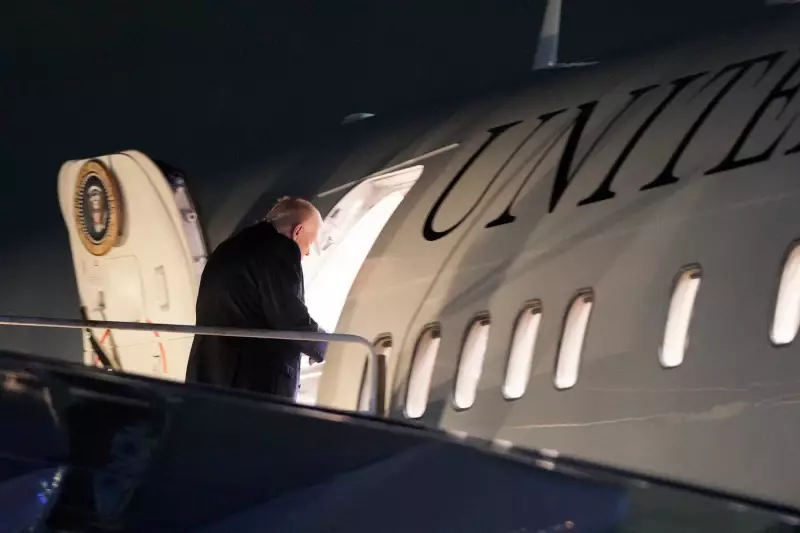
President Trump, who was photographed boarding Air Force One in West Palm Beach, Florida, on that same Sunday, appears to have taken a firm position following the discussion. Sources indicate his current disposition is to prevent the American multinational oil and gas corporation from engaging in Venezuela's troubled but resource-rich oil sector.

Implications for Global Energy and Sanctions Policy
This potential move carries profound implications for international energy markets and U.S. foreign policy. Venezuela sits on the world's largest proven oil reserves, yet its production has collapsed due to years of economic mismanagement, corruption, and sweeping U.S. sanctions aimed at ousting the socialist government.
Allowing a major U.S. company like ExxonMobil back into Venezuela could provide a technical and capital boost to the country's crippled industry. However, it would also represent a dramatic shift in the long-standing sanctions regime. President Trump's apparent resistance signals a continuation of a hardline approach, prioritizing political pressure over immediate commercial access for American firms.
The decision also places ExxonMobil in a difficult position. The company has a contentious history with Venezuela, including a major arbitration victory after its assets were nationalized in 2007. Re-entry could offer a path to recover billions, but it is now contingent on political approval from Washington.
Broader Context and Canadian Connections
This news unfolds amid other significant global events. Notably, the article references that Venezuelans are awaiting the release of political prisoners after a government vow, a situation closely tied to U.S. diplomatic efforts. Furthermore, the potential environmental impact of boosting Venezuela's "very dense, very sloppy" heavy oil production has been flagged as a concern, a topic relevant to Canadian energy discussions.
For Canada, a fellow major oil producer and U.S. ally, shifts in Venezuelan oil output can influence global prices and market dynamics. U.S. policies that restrict or enable Venezuelan oil flows directly affect the competitive landscape for Canadian crude exports. The situation underscores the interconnected nature of North American energy security and foreign policy.
As of now, the President's inclination is not a final directive, but it sends a powerful message to the energy industry and geopolitical observers. The world will be watching to see if this preliminary stance translates into formal policy, reshaping the chessboard of international oil politics.