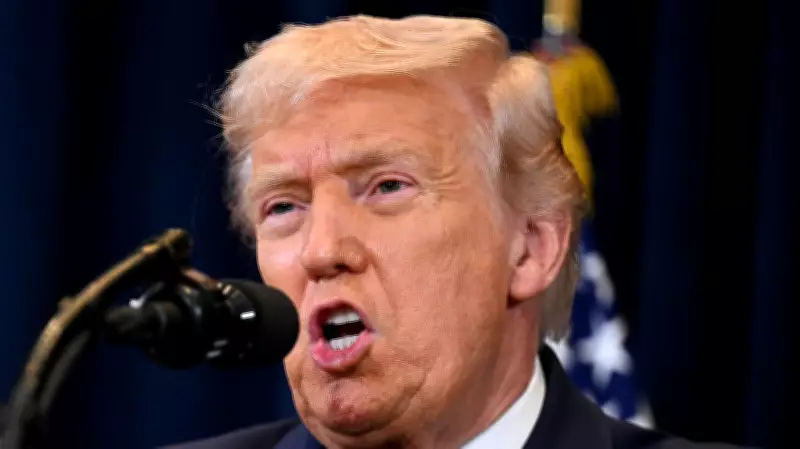
President Donald Trump is making a bold appeal to oil tanker crews operating in the Middle East, urging them to demonstrate courage and continue sailing through the strategically vital Strait of Hormuz. This call comes amidst highly volatile oil prices, which have been significantly impacted by the ongoing conflict between the United States and Iran.
Direct Appeal on National Television
During a recent broadcast of "Fox and Friends," host Brian Kilmeade relayed the president's explicit message. "Here's exactly what he said. 'These ships should go through the Strait of Hormuz, and show some guts. There's nothing to be afraid of. They have no navy. We sunk all their ships,'" Kilmeade stated emphatically.
Kilmeade elaborated further on the president's assessment of the regional military situation. "He said, look, yeah, there's risk in the region. The region's volatile. There are launchers. There's just about 150 left. That's just about 20% of totals. They can't regenerate. They can't make any more, and we are in the region ready to act quickly on all these type of attacks."

Background of the Strait Closure and Price Volatility
Iran initiated a blockade of ships from the Strait of Hormuz last month, a critical maritime chokepoint that typically facilitates the passage of approximately one-fifth of the world's oil and liquified natural gas. This action followed a series of military strikes conducted by the United States and Israel. Iran later clarified that the passage was only closed to vessels from the U.S., Israel, and their Western allies.
The geopolitical tensions triggered dramatic fluctuations in global oil markets. Prices surged over the weekend, reaching their highest levels since 2022, only to plunge sharply on Tuesday. This drop coincided with President Trump telling CBS News that he believes "the war is very complete, pretty much."
Trump's Stark Warning to Iran
On Monday, President Trump issued a severe warning on his Truth Social platform. He declared that if "Iran does anything that stops the flow of Oil within the Strait of Hormuz, they will be hit by the United States of America TWENTY TIMES HARDER than they have been hit thus far."
Energy Secretary Chris Wright had previously offered a different perspective on the price spike in an interview with Fox News, attributing the increase primarily to "fear and perception" rather than fundamental supply issues.
Political Warnings and Strategic Concerns
"Fox and Friends" co-host Lawrence Jones cautioned Democratic politicians about their public commentary regarding the situation. "They should be careful about some of the talking points that they were releasing," Jones warned on Monday's program.
He explained the perceived strategic danger: "They're talking about the oil prices and the way that it's going to impact, and that the president can't last too long. That is exactly what Iran wants to happen. Part of their strategy of this is the propaganda machine that's going out there, saying these things, and they believe that if they can get the prices of oil up, that the president would have to draw from the conflict. So just careful, guys."
Financial Assurance for Maritime Operators
Brian Kilmeade reinforced the president's call to action by highlighting a significant financial safeguard. He cited the U.S. Treasury Department's $20 billion maritime reinsurance plan designed specifically for ships operating in the Gulf region.
"So he's saying, 'Hey guys, even though we get the oil, the market is flush, this is fear, I'm still going to insure your ships. So go through the Strait.' And you know, that's just part of it," Kilmeade stated. "If you want to diminish the Iranian threat, if you want to make sure that this ends up with complete Iran capitulation, show some guts and go through that strait and do it."
The combined message from the administration and its media allies presents a unified front: urging commercial maritime operators to resume normal transit through the Hormuz Strait, backed by military readiness and substantial financial insurance, in an effort to stabilize global energy markets and counter Iranian influence in the region.