President Donald Trump's assertions regarding gasoline prices during his recent State of the Union address have proven inaccurate, and the situation is deteriorating rapidly. The aftermath of his coordinated strikes on Iran over the weekend has significantly disrupted global energy markets, leading to immediate increases in fuel costs for American consumers, according to industry trackers.
Gas Prices Surge Past Key Threshold
Patrick De Haan, a prominent fuel market expert who operates the Gas Buddy tracker and provides real-time updates on social media, reported that gasoline prices began escalating sharply on Monday. He noted that the national average surpassed $3 per gallon, marking the first time since December that prices have reached this level. De Haan shared this observation on the platform X, highlighting the sudden shift in market conditions.
Record Single-Day Increase
On Tuesday, De Haan observed that gas prices experienced their most significant single-day rise since Russia's invasion of Ukraine in 2022. Based on this trend, he projected that average prices could climb as high as $3.35 per gallon if current patterns persist. A separate survey conducted by AAA this week corroborated these findings, showing similar price hikes at pumps across the country.

Trump's Claims Were Already Flawed
Even prior to this recent surge, Trump's statements about gas prices were misleading. During his national address, he claimed that prices were "now below $2.30 a gallon in most states and in some places $1.99 a gallon." However, a fact-check by The Guardian revealed that Oklahoma was the sole state offering gas at $2.30 per gallon at that time. On the day Trump made these remarks, the national average stood at approximately $2.95, significantly higher than he indicated.
Iran Strikes Exacerbate the Situation
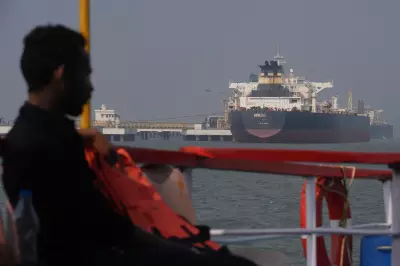
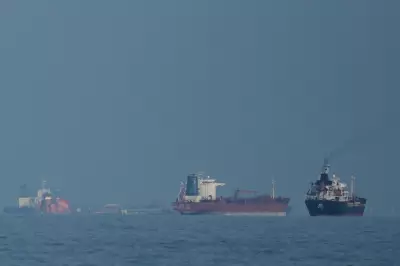
The weekend strikes on Iran, carried out in coordination with Israel and prompting reciprocal attacks across the Middle East, have further undermined Trump's claims. These military actions have damaged critical energy infrastructure in the region and brought oil and gas tanker traffic through the Strait of Hormuz to a complete halt. Analysts at Rabobank in the Netherlands warned on Tuesday that disruptions to shipping in the area could persist for up to three months, exacerbating supply chain issues.
Oil Prices Spike and Market Reactions
The attacks have triggered a sharp increase in oil prices, with Brent crude, the international benchmark, jumping to over $80 per barrel on Tuesday. This represents a rise from around $70 per barrel less than a week ago. Trump attempted to downplay the impact, stating, "We have a little high oil prices for a little while — but as soon as this ends, those prices are going to drop, I believe, lower than even before."
Widening Conflict Spooks Investors
The escalating conflict, which Trump acknowledged on Tuesday could last at least a month, has also rattled financial markets. While major technology stocks helped the market recover by Monday's close, uncertainty remains regarding Tuesday's performance following Trump's comments. Jeffrey O'Connor, U.S. head of equity market structure at Liquidnet, told CNBC on Tuesday, "I do think the possibility of a more prolonged mission can weigh on markets for the next several weeks."
In summary, Trump's optimistic portrayal of gas prices has been contradicted by both pre-existing data and recent geopolitical events. The strikes on Iran have intensified market volatility, leading to higher fuel costs and broader economic concerns, challenging the administration's narrative on energy affordability.