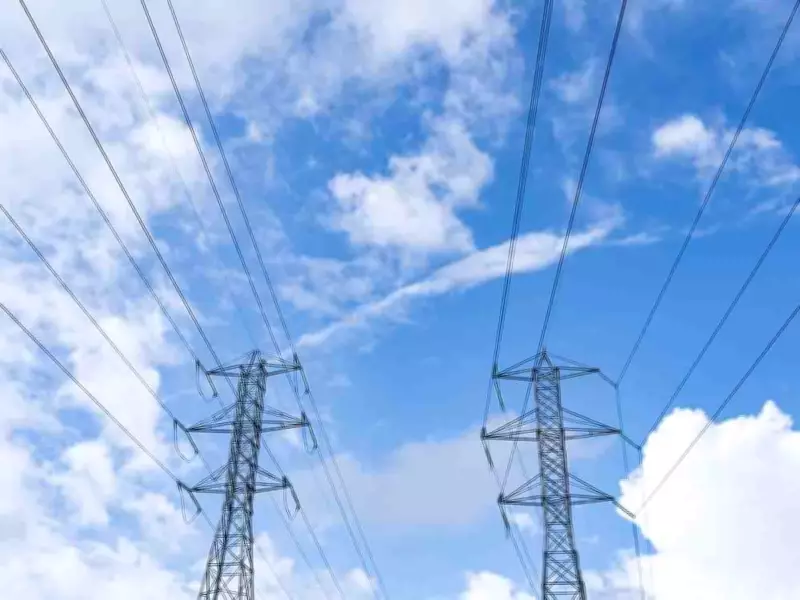
Enhancing Existing Interties Could Revolutionize Canada's Electricity Grid
In the coming weeks, the federal government is poised to reveal its comprehensive strategy for doubling Canada's electricity grid capacity, with expanding east-west connections emerging as a top priority. This initiative is already gaining momentum as provinces collaborate to improve electricity trade coordination. An Ontario-led effort is currently underway to coordinate planning, information sharing, and federal engagement on transmission projects across the country.
The Current State of Canada's Electricity Infrastructure
Technically speaking, east-west electricity connections already exist within Canada's infrastructure. In theory, electrons generated at Churchill Falls, Newfoundland and Labrador could be transmitted all the way to White Rock, British Columbia. However, the practical reality is that by the time they complete that journey, they would likely retain insufficient energy to perform useful work at their destination.
This limitation stems from historical development patterns. When Canada's electricity providers constructed the 20th-century grid, geography and economics served as primary drivers. Hydro-rich provinces including British Columbia, Manitoba, and Quebec found themselves geographically closer to the larger United States electricity market than to neighboring Canadian provinces. Furthermore, the prosperous and expanding U.S. economy demonstrated greater willingness to pay premium prices for power. Consequently, significant effort was directed toward developing transmission infrastructure along north-south lines rather than east-west connections.

Changing Dynamics and Growing Demand
The landscape is now shifting dramatically. The re-election of Donald Trump and the potential implementation of permanent tariffs have intensified focus on strengthening east-west connections within Canada. Simultaneously, the nation's electricity demand is projected to increase substantially due to multiple factors including growing large-load customers, widespread electrification initiatives, and robust economic development across various regions.
This raises a critical question: How can Canada transform its electricity system to enable efficient transmission of electrons across the country with minimal energy loss?
Leveraging Existing Infrastructure
A practical starting point involves maximizing the potential of existing infrastructure. Interties, which facilitate electricity sharing between two or more systems, already connect every province to its neighbors. A prominent example is the key intertie linking Ontario and Quebec, which helps both provinces manage complementary peak-demand seasons effectively. Ontario shares power with Quebec during winter months, while Quebec reciprocates by sharing with Ontario during summer periods.
However, utilization of these interties varies significantly depending on transmission line integrity, market structures, and existing long-term contracts with the United States. Currently, the only interprovincial intertie operating at full capacity connects Quebec with Newfoundland and Labrador, maintaining an impressive 99 percent utilization rate over the past three years.
Regional Variations and Future Developments
In Western Canada, many interties remain underutilized. The condition of the line between Alberta and Saskatchewan has resulted in limited operational capacity. Meanwhile, in Atlantic Canada, Nova Scotia and New Brunswick are addressing their substantial energy needs by constructing a second intertie scheduled to become operational in 2028.
Rather than pursuing formal major projects that require extensive new infrastructure, upgrading and optimizing existing provincial connections could enable efficient sharing of energy surpluses and deficits in economically viable ways. This approach represents a pragmatic solution to Canada's evolving electricity needs while maximizing current investments in transmission infrastructure.