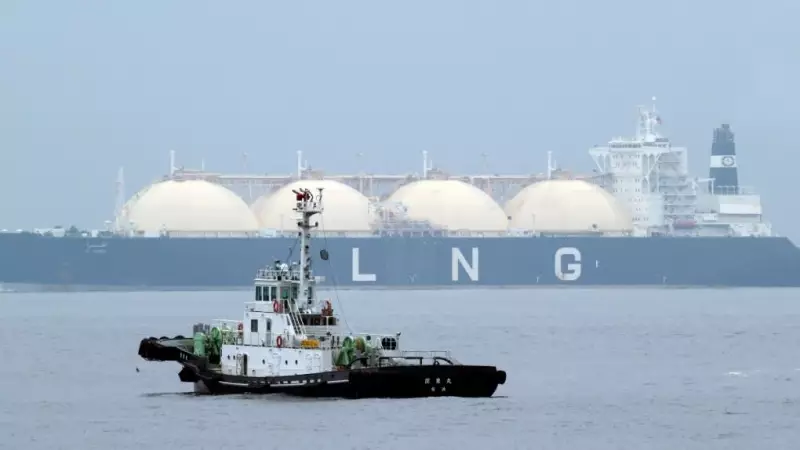
The United States cemented its dominance in the global energy market in 2025, achieving an unprecedented milestone in liquefied natural gas (LNG) exports. According to reports, the U.S. became the first country ever to export more than 100 million metric tons (mmt) of LNG in a single year, setting a new global benchmark.
A Historic Milestone for American Energy
This landmark achievement underscores a period of significant growth and expansion for the American LNG industry. The record-breaking export volume was fueled by the activation of new production and export capacity throughout the year, allowing the U.S. to solidify its position as the world's leading supplier of liquefied natural gas. The 100 million metric ton threshold represents a symbolic and economic victory for the sector.
Driving Forces Behind the Export Surge
The banner year for U.S. LNG was not accidental. It was marked by the strategic commissioning of new liquefaction facilities and export terminals, which expanded the nation's ability to produce and ship LNG to international markets. This surge in capacity came online to meet robust global demand, particularly from European nations seeking alternatives to pipeline gas following geopolitical tensions, as well as from growing economies in Asia.

The data, reported in early January 2026, highlights the rapid scale-up of the U.S. energy infrastructure. From a standing start less than a decade prior, the United States has transformed into an export powerhouse, leveraging its vast natural gas reserves to influence international energy dynamics and trade flows.
Implications for Global Markets and Energy Security
This record-setting performance has profound implications. For allies and trading partners, increased U.S. LNG exports contribute to greater energy security and supply diversification. For the American economy, it translates into substantial export revenues and job creation within the energy and logistics sectors.
However, the expansion also places the U.S. at the center of ongoing debates about climate commitments and the transition to renewable energy. While natural gas is often touted as a cleaner-burning alternative to coal, its role in a long-term sustainable energy strategy remains a point of discussion among policymakers and environmental advocates.
As the world navigates complex energy needs, the U.S. LNG export record of over 100 million metric tons in 2025 stands as a defining moment, showcasing the nation's formidable capacity to shape global energy supply chains for the foreseeable future.