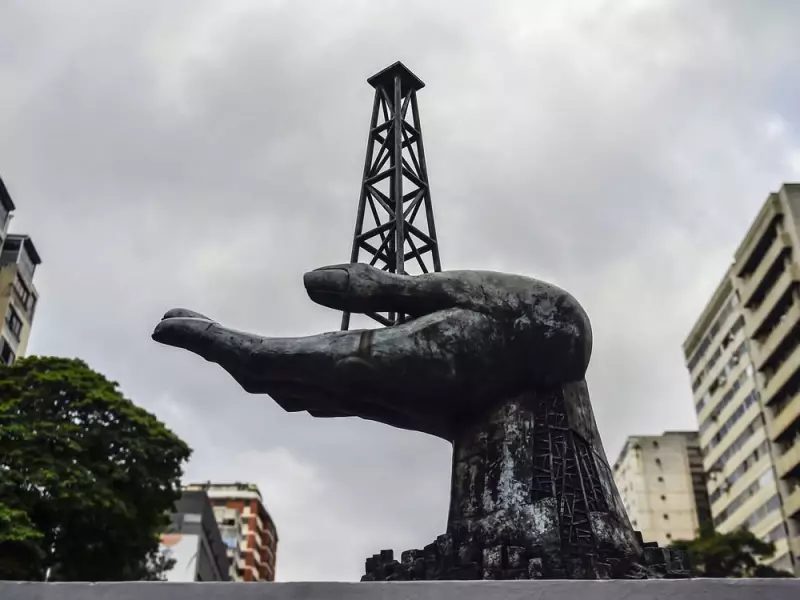
The geopolitical landscape for global oil shifted dramatically over the weekend, with direct implications for Canada's energy sector. Following the arrest and extradition of Venezuelan President Nicolás Maduro on Saturday, January 6, 2026, United States President Donald Trump called for American oil companies to invest billions to rehabilitate Venezuela's crippled energy infrastructure. This potential U.S.-led overhaul of one of the world's largest oil reserves presents both a challenge and a strategic consideration for Canadian producers.
The Staggering Scale of Venezuela's Untapped Reserves
To understand the stakes, one must grasp the sheer volume of oil at play. Venezuela sits atop the world's largest proven crude oil reserves, estimated by OPEC at 303 billion barrels. This figure represents approximately 19% of all global reserves, surpassing even Saudi Arabia (267 billion barrels) and Iran (209 billion barrels).
Canada's position on this list is nuanced. OPEC's data, which excludes non-conventional oil like the synthetic crude from Alberta's oilsands, places Canadian reserves at a mere 4.3 million barrels. However, other authoritative sources, including Natural Resources Canada and the U.S. Energy Information Administration, provide a vastly different picture, estimating Canada's reserves at 170 billion barrels. This highlights a key similarity: like Canada, a significant portion of Venezuela's reserves consists of heavy, bitumen-rich crude, which is more complex and costly to extract and refine.

Most of Venezuela's untouched resource lies in the Orinoco Belt, a massive geological formation spanning over 55,000 square kilometres in the country's northeast.
A Legacy of Unfulfilled Potential
Venezuela's current output tells a story of dramatic decline from its peak. In the 1970s, it was a top global producer, with daily output exceeding three million barrels in the late 1990s. Decades of economic sanctions, nationalization, mismanagement, and chronic underinvestment have since reduced its industry to a shell of its former self.
In 2024, Venezuela produced an average of just 921,000 barrels per day, less than one percent of global daily crude supply. For context, Saudi Arabia produced 8.9 million barrels daily, while Canada, depending on the measurement criteria, produced between 1.5 million and over five million barrels per day. Despite this low output, oil remains the lifeblood of Venezuela's economy, accounting for 80% of its exports and 17% of its GDP.
As Rory Johnston, an oil market analyst at Commodity Context, noted, Venezuela has the potential for a massive production rebound with investment and market access, but "decades of underinvestment and resulting loss of operational expertise has rotted the physical infrastructure that underpins the industry."
Immediate Ripples and Long-Term Questions for Canada
The news of the U.S. action sent immediate, though temporary, shockwaves through Canadian markets. On Monday, January 8, share prices for major Canadian energy firms like Suncor Energy Inc., Cenovus Energy Inc., Enbridge Inc., Imperial Oil Ltd., and Canadian Natural Resources Ltd. all dipped before recovering the following day.
This market movement reflects a core concern for Canadian stakeholders: a potential reorientation of international capital. President Trump's statement that he wants American companies to "go in" and "spend billions of dollars" suggests a clear preference. Analysts warn that Canada must adopt a proactive stance, as the U.S. "will clearly favour its own companies investing in Venezuela at the expense of others."
The long-term implication is a potential shift in the global heavy oil supply dynamic. A successfully revived Venezuelan industry, backed by U.S. capital and technology, could introduce a new major competitor into the market, potentially affecting global prices and investment flows that have traditionally favoured Canadian oilsands development. The situation underscores the interconnected nature of global energy politics and the need for strategic foresight in Canada's energy policy.