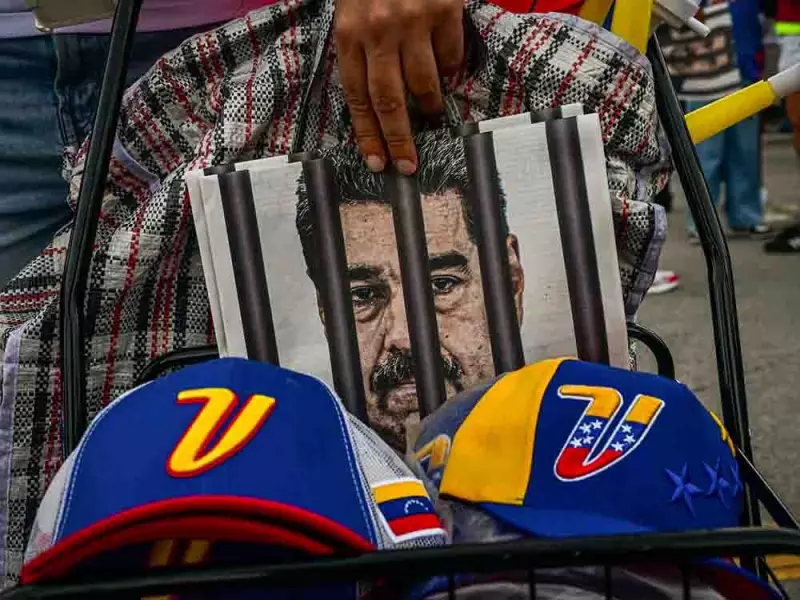
The dramatic capture of Venezuelan President Nicolás Maduro by U.S. authorities has sent shockwaves through global energy markets, casting a long shadow over the future of billions of barrels of oil promised to foreign state-owned companies.
Major Assets Held by Chinese and Russian Firms
According to a recent analysis from Morgan Stanley, state-owned enterprises from China and Russia hold some of the largest foreign claims on Venezuela's vast oil resources. Analysts, including Martijn Rats, highlighted that China Petroleum & Chemical Corp. (Sinopec) is entitled to approximately 2.8 billion barrels of Venezuelan oil.
This is followed by significant holdings from Roszarubezhneft—which acquired Rosneft's Venezuelan assets in 2020—and the China National Petroleum Corp. (CNPC). The data, sourced from consultancy Wood Mackenzie, underscores the deep financial and strategic stakes these nations have in the Latin American country's energy sector.

Uncertain Future for Production and Agreements
The central question now facing the market is what happens to Venezuela's oil production moving forward. "The crucial question is what will happen with Venezuela’s production from here. This remains hard to forecast," the Morgan Stanley note stated. However, the analysts suggested that over the medium term, production risks are skewed to the upside, at least from a technical and resource availability perspective.
Despite the sizable foreign claims, they are dwarfed by the more than 200 billion barrels of reserves controlled by Venezuela's state-owned Petroleos de Venezuela SA (PDVSA). The fate of numerous production-sharing agreements PDVSA signed with smaller Chinese firms—such as Anhui Guangda Mining Investment Co. and China Concord Resources Corp.—is now in limbo.
A 'Wait-and-See' Approach from Key Players
Experts believe major stakeholders like China are likely to adopt a cautious stance. Michal Meidan, head of China energy research at the Oxford Institute for Energy Studies, noted that "the Chinese government and firms will wait and see how events unfold." She added that while they may face short-term losses in oil flows and assets, they could find a path back to Venezuelan resources in the future.
Other international players with smaller entitlements include Indian companies ONGC Videsh Ltd. and Indian Oil Corp., as indicated on their corporate websites. The event, which occurred over the weekend of January 4-5, 2026, has created a complex geopolitical and economic puzzle with global implications for energy security and international investment.