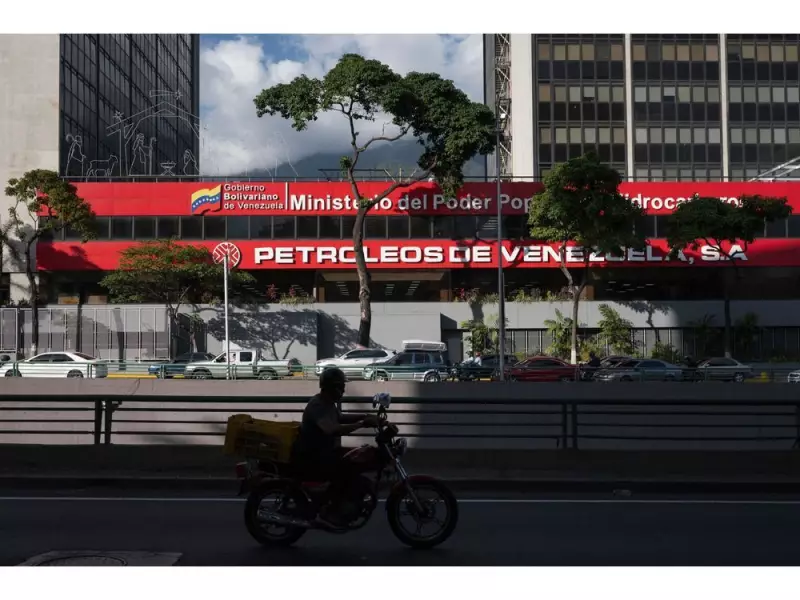
Political momentum is building for a new Canadian oil pipeline to the West Coast, fueled by recent geopolitical shifts in Venezuela under President Donald Trump's administration. Analysts suggest that Trump's push to unlock Venezuelan crude supplies is creating a stronger political and economic case for Canada to diversify its oil exports beyond the United States.
Venezuelan Crude Poses Direct Competition
Refineries in the American Midwest are specifically configured to process heavy crude oil, the primary type produced by both Canada and Venezuela. On Monday, prices for Canadian heavy crude slumped as traders reacted to the potential removal of Venezuelan President Nicolas Maduro. This political shift could clear the way for the United States to access abundant resources from the South American nation.
"Once Venezuelan oil is not just unblocked but unsanctioned, it will begin competing more directly with Canadian barrels on the U.S. Gulf Coast," explained Rory Johnston, a researcher at Commodity Context. He added that Venezuelan oil could reach the region "much more cheaply than can barrels shipped by pipeline all the way from Alberta."

Alberta Premier Champions Pipeline Diversification
Canada's oilsands are located far north of the U.S. border, thousands of miles from major refining hubs in the American south. Currently, Canada has only one oil pipeline capable of shipping to non-U.S. customers: the Trans Mountain pipeline, with a capacity of about 900,000 barrels a day.
Alberta Premier Danielle Smith has been a leading advocate for a new pipeline with the capacity to carry 1 million barrels a day west to the British Columbia coast. From there, oil could be loaded onto tankers for sale in growing Asian markets like China.
Smith directly linked the Venezuela situation to the urgency of the project. "Recent events surrounding Venezuelan dictator Nicolas Maduro emphasize the importance that we expedite the development of pipelines to diversify our oil export markets," she stated in a social media post. She specifically mentioned the need for a new Indigenous co-owned bitumen pipeline to BC's northwest coast to reach Asian buyers.
Federal Goals and Competitive Outlook
Prime Minister Mark Carney has set an ambitious national target of doubling Canada's total exports to non-U.S. markets by 2035. The goal is to prevent the country from becoming overly economically dependent on its southern neighbour. While his government has removed some regulatory obstacles for new coastal pipelines, construction would still take many years.
Speaking to reporters in Paris on Tuesday, Carney acknowledged that a functioning Venezuelan economy would produce more oil, which would benefit its people and bring stability to the region. However, he expressed confidence in Canadian oil's competitiveness, citing its low-risk profile and low cost. His government is also supporting carbon capture initiatives to improve its environmental standing.
"We welcome the prospect of greater prosperity in Venezuela, but we also see the competitiveness of Canadian oil," Carney said. "In that context, a pipeline and exports to Asia — we've got competitive product and we'd be diversifying our markets."
Economists note that the U.S. actively seeking other energy suppliers may help soften domestic Canadian opposition to a new pipeline. "The events in Venezuela reinforce the need for export diversification, and a pipeline to the west coast would be the best solution," said Charles St-Arnaud, chief economist at Servus Credit Union.
The forced change in Venezuela's leadership has abruptly highlighted the risks of Canada's concentrated export market, potentially transforming the political landscape for a long-debated energy corridor to the Pacific.