The recent dramatic shift in Venezuela's political landscape has sparked a renewed debate about the future of Canada's energy exports, but economists and industry analysts are urging caution against alarmist predictions.
A Nuanced Outlook for North American Oil
Following a weekend where U.S. forces ousted Venezuelan President Nicolás Maduro, many observers anticipate the swift lifting of long-standing sanctions on the country. This has led to speculation about a flood of Venezuelan crude entering the market and potentially displacing Canadian barrels in the United States, Canada's primary oil customer.
However, experts like Rory Johnston, an oil market researcher and former economist at Scotiabank, argue these fears are "deeply overdone." He emphasizes that the global oil market operates on dynamic pricing and incentives. "We’re not going to be left with a massive surplus of oil that we can’t do anything with, because as that price weakens, the incentive to buy it increases," Johnston stated.

Canada's Entrenched Position vs. Venezuela's Challenges
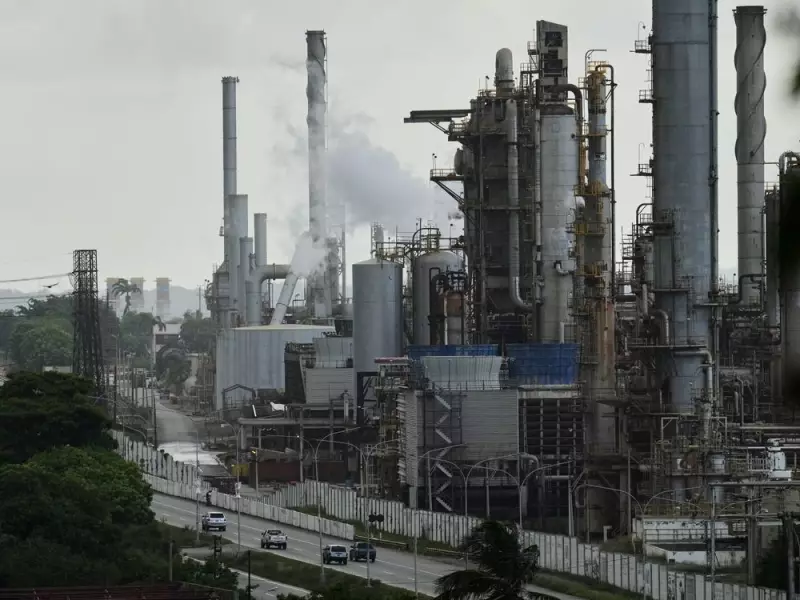
The current production figures highlight a significant gap. Canada currently pumps out approximately 5.5 million barrels per day. In contrast, Venezuela, despite holding the world's largest proven oil reserves, produces only about one million barrels daily, a sharp decline from its mid-2010s output of 2.5 million barrels. This drop is attributed to mismanagement of the state-owned PDVSA and U.S. sanctions in place since 2017.
Canada's export relationship with the U.S. is deeply integrated. Canada supplies 63% of total U.S. crude oil imports, with the majority flowing via pipelines to refineries in the U.S. Midwest. This network creates a logistical and economic bond that is not easily broken. Analysts acknowledge that the roughly 10% of Canadian exports destined for the U.S. Gulf Coast could face more immediate competition.
Yet, even this vulnerability may be offset. Johnston points to a potential "counterbalancing effect" where Asian markets increase their purchases of Canadian oil to replace any Venezuelan barrels that are redirected to the U.S.
Billions in Investment Needed for Venezuelan Revival
A critical factor tempering the threat is the dire state of Venezuela's oil infrastructure. Any substantial increase in production is contingent on American oil companies investing billions of dollars to revive the crippled industry, a process that would take years, not months.
David Oxley, chief climate and commodities economist at Capital Economics, echoed this sentiment in a research note. "Even if U.S. involvement in Venezuela translates into open season for its major oil firms, the outlook for oil production and investment faces significant economic and political challenges," he wrote.
Oxley added that the global oil market is already poised to enter a supply glut by 2026, which will lower prices. "Crucially, we already expect lower oil prices to drive a modest decline in domestic U.S. oil production into 2027, and so the broader backdrop is hardly conducive to large-scale investments in new high-cost wells in Venezuela," he concluded.
The weekend's events have undoubtedly reignited discussions about the need for Canada to diversify its oil export markets beyond the United States. However, the consensus among analysts suggests that the Canadian energy sector is not facing an imminent crisis. The complex interplay of entrenched trade relationships, Venezuela's profound operational challenges, and a shifting global market landscape means the rise of Venezuelan crude will be a slow evolution, not an overnight replacement for Canadian oil.