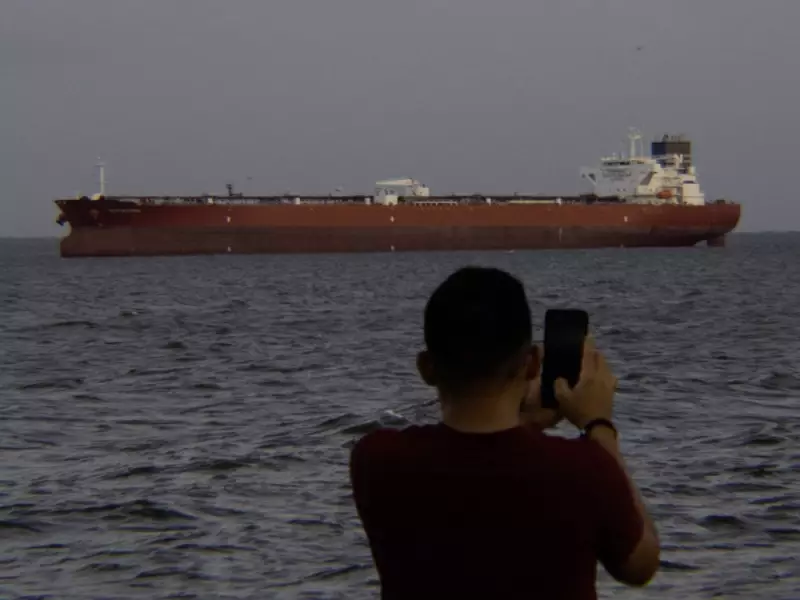
The clandestine network of crude oil tankers that kept Venezuela's economy afloat under international sanctions is now emerging from the shadows. This follows the capture of the country's strongman, Nicolas Maduro, which has lifted the veil on how the sanctioned nation secretly moved its most vital commodity.
The Ghost Ships Come to Light
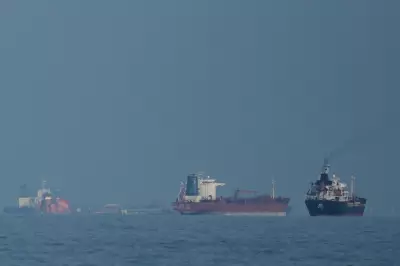
For years, a so-called "dark fleet" of supertankers operated under the radar, cloaking their locations, identities, and destinations to avoid detection by authorities enforcing U.S. sanctions. These vessels were central to the survival of the Maduro regime, for whom oil revenue funded everything from essential imports to military assets.
The method of operation was sophisticated. Ghost ships often concealed their location by turning off or spoofing GPS signals, creating false digital trails. In one striking example, the supertanker Rene appeared to be near China in late December. However, just 12 days later, its true GPS signal placed it off the coast of Venezuela—a physical impossibility given the 50-day voyage time, revealing the earlier data as spoofed.

A Fleet Revealed After Political Upheaval
The hidden vessels began revealing their true locations in the days after Maduro's capture on January 3, as the United States moved to assert control over Venezuela's oil industry. This shift marks a significant turn in the geopolitical struggle over the country's vast resources.
One of the most telling cases is the supertanker Marbella. After its location remained a mystery for over a year, the vessel turned on its transponder this past weekend. Data showed it was sitting off the Venezuelan coast, loaded with a staggering 1.9 million barrels of oil. The Marbella is now part of efforts by the U.S. government and major commodity traders to legally move this crude to market.
Scale, Impact, and the Path Forward
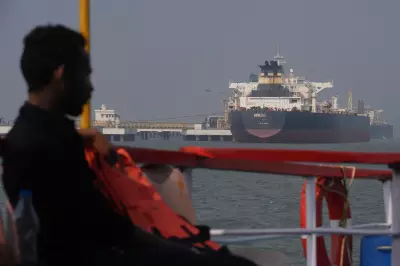
The scale of this covert operation was immense. At its peak, the dark fleet helped Venezuela lift its daily oil output to a multi-year high of one million barrels. Last year alone, a fleet of 71 massive supertankers—each about the length of three football fields—helped deliver roughly 400,000 barrels per day of Venezuelan crude to refiners in China. This equates to nearly six of these giant vessels traversing Venezuelan waters incognito every month.
Now, trading giants Trafigura Group and Vitol Group are assisting the U.S. government in marketing as much as 50 million barrels of Venezuelan oil. An initial batch of 4.83 million barrels, already aboard former ghost vessels, is set to be discharged in the Caribbean. The Marbella, with crude entrusted to Vitol, is currently en route to the South Riding Point storage complex in the Bahamas.
This unfolding situation has direct implications for global energy markets and sanctions enforcement. The emergence of the dark fleet not only exposes the lengths to which the Maduro regime went to survive but also signals a potential new chapter where Venezuela's oil could re-enter formal markets under U.S. oversight, aiming to rebuild the country's crippled economy.