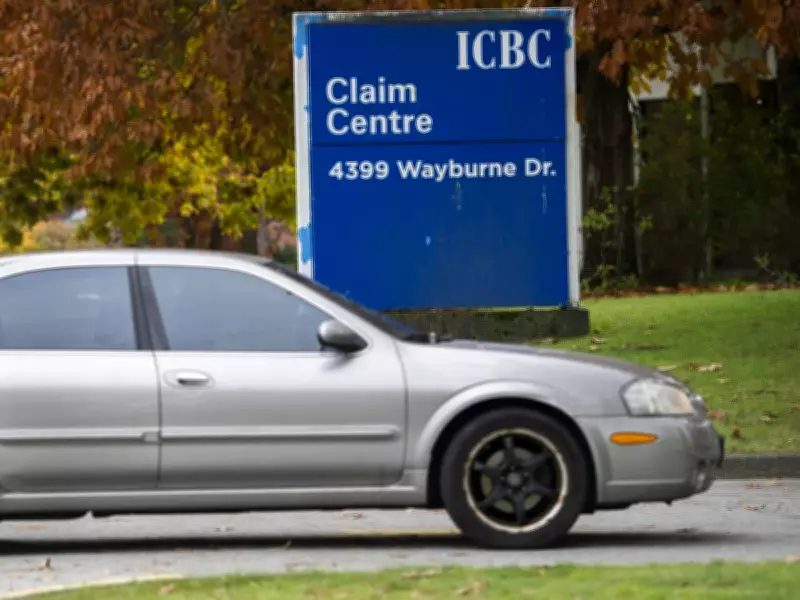
ICBC Forced to Change Fault Determination After Tribunal Ruling on Left-Turn Crash
A British Columbia civil resolution tribunal has delivered a significant ruling against the Insurance Corporation of British Columbia, ordering the provincial insurer to refund a driver's $500 deductible after finding ICBC incorrectly assigned fault in a common left-turn intersection collision. The tribunal's decision has prompted ICBC to announce changes to how it determines responsibility in such cases.
Case Details and Tribunal Findings
Kiranjeet Kaur successfully challenged ICBC's determination that she was 100 percent responsible for a 2024 crash at a busy Surrey intersection where she was making a left turn. Adjudicator Deanna Rivers ruled that ICBC had wrongly placed the burden on Kaur to prove the other driver's negligence caused the collision.
"I find the onus shifted to T.P. (the other driver who wasn't named) to prove that he couldn't stop on time," Rivers wrote in her decision. The tribunal found that ICBC had "breached its statutory obligation" and that Kaur was entitled to damages including her $500 deductible plus court costs.

Evidence That Changed the Outcome
Kaur's case was strengthened significantly by security video footage she obtained from a nearby business. The video evidence showed that Kaur began her left turn after the traffic light had been yellow for two to three seconds, while the other driver, identified only as T.P., entered the intersection on what Rivers described as a "stale" yellow light.
Kaur's husband, who represented her at the online hearing despite not being a lawyer, argued that T.P. was responsible because he entered the intersection on a yellow light, was speeding, was in Kaur's lane, and made no attempt to avoid the collision. ICBC had maintained its original position that Kaur was fully responsible as the left-turning vehicle required to yield to oncoming traffic.
ICBC's Response and Policy Changes
Following the tribunal ruling, ICBC spokeswoman Lindsay Wilkins stated that while the civil resolution tribunal cannot order ICBC to change its responsibility decisions, "ICBC honours the CRT's findings on responsibility." She confirmed that "ICBC will update its responsibility decision for this claim to align with the CRT's findings" and indicated the insurer would make broader changes to its determination process.
Rivers noted in her decision: "Ms. Kaur does not ask for an order that ICBC change its responsibility determination. However, ICBC says it will make this change if Ms. Kaur is found less responsible for the accident than it determined."
Legal Precedent and Broader Implications
The tribunal's decision relied on a 2025 B.C. Supreme Court ruling that established responsibility in such cases depends on the color of the traffic light. Rivers determined that because Kaur had proven T.P. entered on a stale yellow light, she did not bear the burden of proving T.P. could have stopped safely.
This case highlights the challenges accident victims face when challenging ICBC decisions under British Columbia's no-fault insurance system. While ICBC maintains that each claim is unique and that left-turning vehicles are typically responsible as they must yield to oncoming traffic, this tribunal ruling establishes important parameters for exceptions to that general rule.
The decision comes amid ongoing scrutiny of ICBC's claims handling processes and represents a significant victory for individual policyholders seeking to challenge the insurance corporation's fault determinations in common intersection collisions.