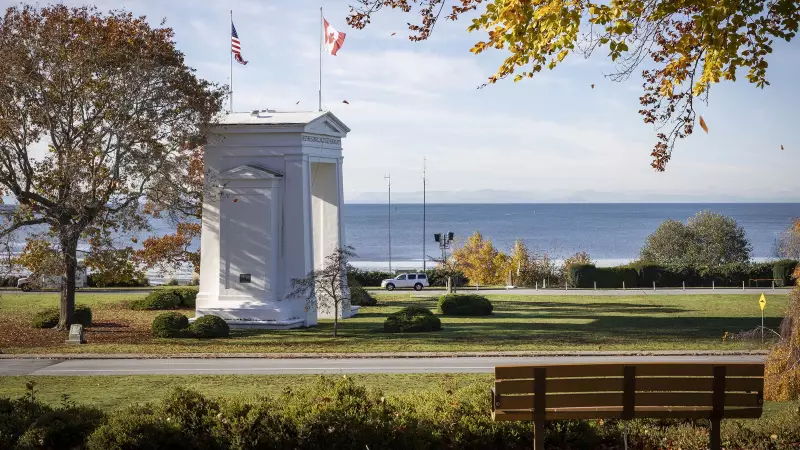
A dramatic 40% decline in vehicle crossings from British Columbia into the United States has defined travel patterns in 2025, a direct consequence of a sustained Canadian boycott. The protest, sparked by U.S. President Donald Trump's tariff threats and annexation rhetoric, has had a profound and lasting impact on businesses and communities on both sides of the border.
A Sustained Boycott Reshapes Regional Travel
Statistics Canada data reveals a staggering loss of more than 1.6 million trips taken by British Columbians to the U.S. from January to November 2025 compared to the same period in 2024. This plunge in vehicle traffic has delivered a severe blow to Washington State, for which Canada is the top international tourist market.
The economic repercussions were felt almost immediately. Northwest Washington was particularly hard-hit, with hotel demand dropping nine per cent in the early months of the boycott. In response, Seattle businesses launched the "Open Arms for Canada" campaign, offering to accept the Canadian dollar at par to lure back visitors.

By summer, the downturn forced operational cuts. Retailers and hospitality venues in Bellingham reported reducing staff hours, while hiring in border towns like Blaine suffered. The ripple effect extended to Canadian duty-free shops, with owners like Cam Bissonnette in Osoyoos describing empty stores and full shelves. Even travel from the U.S. into B.C. decreased, with American vehicle crossings down approximately nine per cent.
Updates on Major Stories: From Billionaires to Forfeiture
The year's news cycle was also dominated by several complex and high-profile stories originating in British Columbia.
Controversial billionaire Weihong (Ruby) Liu saw her ambitious attempt to acquire 25 Hudson's Bay Company department store leases blocked by an Ontario court in late October. Judge Peter Osborne cited significant concerns over her financing and management team's expertise. The ruling came despite lingering questions about Liu's tax residency status, as the owner of multiple B.C. malls and a multi-million dollar UBC mansion claims she is not a resident of Canada for tax purposes.
In Vancouver's luxury real estate market, a company beneficially owned by Sheikh Hamdan bin Mohammed bin Rashid Al Maktoum, the Crown Prince of Dubai, sold two of four penthouse units at the Fairmont Pacific Rim. The sales, totaling $14.5 million, occurred in 2025 after the four-unit collection was listed. The crown prince retained the top-floor penthouse, purchased for $25 million in 2013.
Legal Battles and Unusual Property Sales
A significant civil forfeiture case continued to unfold, with the B.C. government seeking to seize a $2.2-million Surrey house allegedly linked to Mexico's Sinaloa cartel. Owner James Sclater has filed a response vehemently denying the allegations, which claim he and two housemates negotiated directly with cartel leadership. Sclater asserts police violated his Charter rights during the September 2024 raid that uncovered firearms and drugs.
A bizarre Vancouver tax sale saga reached its conclusion in November when city council overturned the sale of a $1.6-million leasehold condo. Purchaser Smit Kamdar had bid $272,000 for the unit after its owner, Melba Dorothy Hoffman, failed to pay property taxes. The city later learned Hoffman had died in 2016. An heir in Washington State failed to deliver payment by the redemption deadline, leading council to cancel the sale and refund Kamdar, who participated in the process in good faith.
Meanwhile, a South False Creek lot earmarked for public open space remained on the market with a $2-million asking price, despite a provincial assessed value of just $1,500. The 16,500-square-foot property at 500 Starboard Square has restrictive covenants preventing development, according to the City of Vancouver's official plan.

Security Incident and Terrorism Charge
In a unprecedented security event, Vancouver International Airport (YVR) temporarily halted operations on July 15 after a rogue Cessna 172 aircraft circled its airspace. The pilot, Shaheer Cassim, 39, was arrested after landing and charged with hijacking constituting terrorism—a first-of-its-kind charge in Canada. Police alleged he acted with an ideological motive linked to climate change. Cassim remains in custody awaiting a bail hearing.
These stories, marked by economic shifts, legal complexities, and unusual events, captured significant public attention and defined key narratives in British Columbia throughout 2025.