U.S. Treasury Secretary Issues Warning to Canadian Prime Minister Ahead of Crucial Trade Negotiations
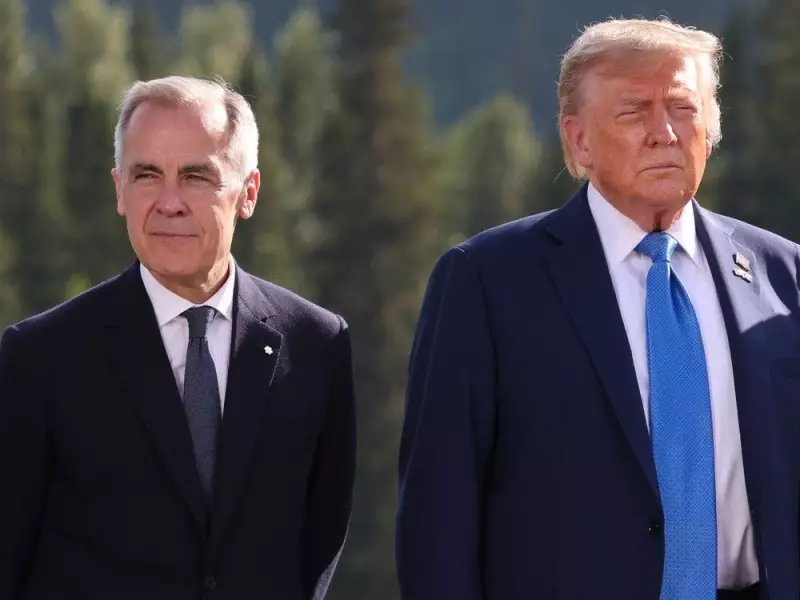
In a pointed public statement, U.S. Treasury Secretary Scott Bessent has advised Canadian Prime Minister Mark Carney to avoid picking a fight with former President Donald Trump as important trade negotiations approach. Bessent's comments come during a period of heightened tension between the two North American neighbors, with the Canada-United States-Mexico Agreement (CUSMA) scheduled for review this year.
Direct Advice from Washington
Speaking at an event in Washington, D.C. on Wednesday, Bessent offered what he characterized as constructive advice to the Canadian leader. "I would just encourage Prime Minister Carney to do what he thinks is best for the Canadian people, not his own virtue signalling, because we do have a CUSMA negotiation coming up," Bessent stated during an interview with CNBC's Sara Eisen. "I would not pick a fight going into those negotiations to score some cheap political points."
The Treasury Secretary's remarks specifically referenced Carney's recent speech at the World Economic Forum in Davos, Switzerland, which reportedly created friction with Trump. Bessent suggested that Carney's political positioning might undermine Canada's negotiating position with its much larger southern neighbor.

Political Background as Negotiation Liability
Bessent elaborated on his concerns by highlighting Carney's political origins. "Carney rose to power on an anti-American, anti-Trump message, and that's not a great place to be when you're negotiating with an economy that is multiples larger than you are and your biggest trading partner," he observed.
The Treasury Secretary also questioned Carney's transition from central banking to politics, drawing from his own investment experience. "In my investment career, I've seen what happens when a technocrat tries to pivot and become a politician. It never really works out well," Bessent remarked, adding another layer to his critique of Canada's leader.
Recent Trade Tensions and Denials
The warning comes against a backdrop of existing trade friction. Following the imposition of tariffs on various Canadian exports to the United States in 2025, the White House has been signaling potential changes to CUSMA during this year's review process.
Bessent's latest comments follow his previous claim that Carney had walked back his Davos remarks during a phone conversation with Trump. However, Carney firmly denied this characterization when speaking to reporters on Parliament Hill on Tuesday. "To be absolutely clear, and I said this to the president, I meant what I said in Davos," the Prime Minister asserted, maintaining his position despite the diplomatic pressure.
Strategic Implications for Canada-U.S. Relations
The public exchange highlights several important dynamics in contemporary Canada-U.S. relations:
- The significant power imbalance between the two economies, with the U.S. economy being "multiples larger" than Canada's
- The delicate balance between domestic political positioning and international diplomacy
- The ongoing challenges in maintaining productive trade relations amid political differences
- The particular sensitivity of CUSMA negotiations, which directly affect billions in cross-border commerce
As both countries prepare for the upcoming trade agreement review, Bessent's comments serve as a public reminder of the high stakes involved and the potential consequences of political rhetoric on economic negotiations. The situation continues to develop as Canadian officials navigate their relationship with their largest trading partner while maintaining their political principles and policy positions.