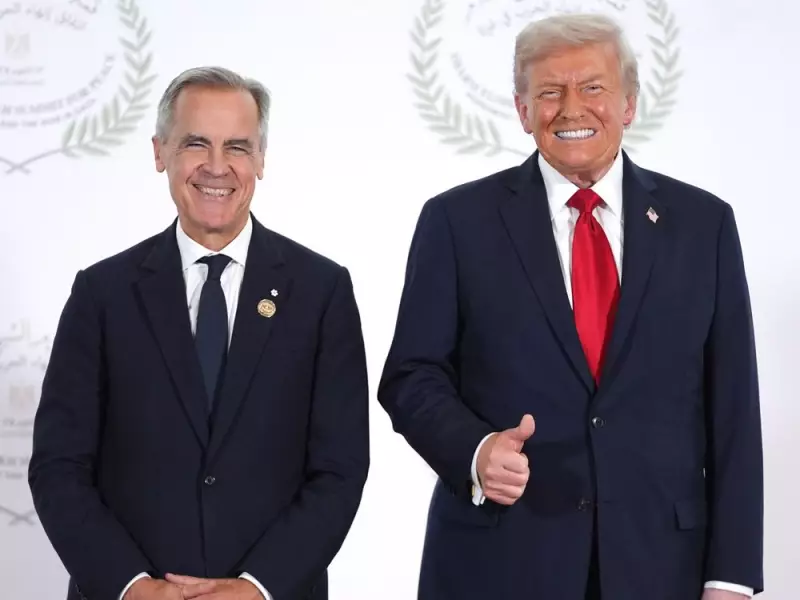
Prime Minister Mark Carney has officially declared the era of global free trade over, setting the stage for a major shift in international trade policy as Canada prepares for the 2026 renegotiation of the USMCA trade agreement with the United States.
The End of Free Trade Era
During his recent speech at the Asia-Pacific Economic Cooperation summit in South Korea, Carney made a stark declaration that sent ripples through international trade circles. The Prime Minister stated that "the old world of steady expansion of rules-based liberalized trade and investment" has disappeared. This world, he noted, had been fundamental to Canada's prosperity and that of many other nations.
The announcement comes at a critical juncture in North American trade relations, with the USMCA agreement scheduled for renegotiation in 2026. The original agreement, known as CUSMA in Canada, has governed trade between Canada, the United States, and Mexico since its implementation.

New Vision for North American Trade
Enter Oren Cass, founder of the American Compass think-tank and a significant influencer in shaping former President Donald Trump's trade policies. In a recent Financial Times column titled "Here's what a new US-Mexico-Canada trade deal should look like," Cass outlined his vision for the upcoming negotiations.
Cass advocates moving away from traditional free trade principles toward a system focused on "balanced trade" and reciprocity. Like Carney, he views global economic liberalization as a failed experiment, rejecting the benefits of globalization that have been central to trade policy since the creation of the World Trade Organization in 1995.
The concept of balanced trade, as promoted by Cass, would require that trade between nations be more evenly balanced, addressing what Trump has frequently described as unbalanced relationships. The former president has often singled out Canada as a culprit in trade imbalances, citing Canada's higher exports to the U.S. compared to American exports to Canada.
Economic Experts Push Back
Not all economists agree with the push toward balanced trade. Donald Boudreaux, a free market libertarian economist from George Mason University, has called the concept "fallacious bollocksed-up." He points to the United States' consistent trade deficits since 1976, arguing that these are offset by capital surpluses that provide investment funds flowing back into the American economy.
Nobel Prize-winning economist Paul Krugman offers similar arguments, suggesting that trade deficits actually reflect America's strength as an investment destination. According to Krugman's analysis, foreign investors wanting to invest in America must buy dollars, driving up the currency's value and giving Americans greater purchasing power for imports—ultimately leading to trade deficits.
The debate over balanced versus free trade comes at a time of significant uncertainty in global trade policy. As Carney noted in his APEC speech, the world is moving toward a system characterized by "total confusion and inconsistency" largely triggered by Trump's trade policies, though the situation cannot be attributed to the former president alone.
With the 2026 USMCA renegotiation approaching, Canada faces critical decisions about how to navigate this new trade landscape. The outcome will have profound implications for Canadian businesses, consumers, and the broader economy as the country determines its position in what Carney describes as a fundamentally changed global trading system.