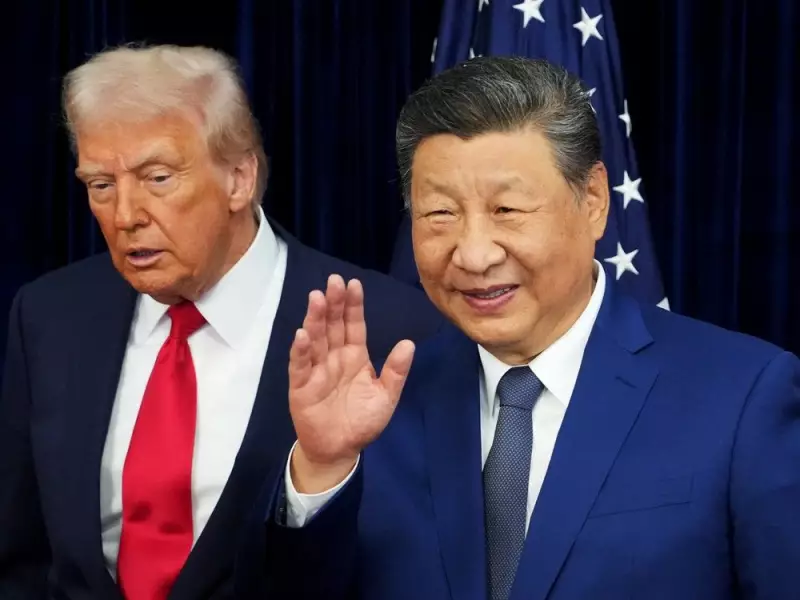
In a significant diplomatic move, Prime Minister Mark Carney has landed in Beijing, marking the first visit by a Canadian leader to the Chinese capital in nearly a decade. His mission: to reset a relationship strained by years of tension and signal Ottawa's intent to forge a more independent foreign policy path, distinct from Washington's influence.
A Delicate Diplomatic Balancing Act
Carney is scheduled to meet with Chinese President Xi Jinping on Friday, January 16, 2026. The trip comes at a moment of considerable pressure for Canada, as its relationships with both global superpowers face challenges. From the lingering fallout of the Huawei affair and reciprocal trade sanctions with Beijing, to U.S. President Donald Trump's tariffs on Canadian steel, lumber, and copper—coupled with his provocative "51st state" rhetoric—the need for Ottawa to broaden its economic partnerships is acute.
The Prime Minister framed the visit as a pragmatic step toward trade diversification. Before departing on Tuesday, Carney stated on social media platform X that "China is our second-largest trading partner, and the world’s second-largest economy." He argued that a constructive bilateral relationship would foster "greater stability, security, and prosperity on both sides of the Pacific."

Beijing's Strategic Calculations
Analysts suggest China has much to gain from welcoming Carney. President Xi views the change in Canadian leadership from Justin Trudeau to Carney as a prime opportunity to repair ties that collapsed after the 2018 arrest of a Huawei executive and the subsequent detention of two Canadian citizens, known as the "Two Michaels" crisis.
"China sees Carney’s succession as an opportunity to patch up relations after years of deterioration," said Dominic Chiu, a senior analyst at the political risk consultancy Eurasia Group. Beijing's objectives are clear: to draw a G7 economy like Canada closer into its economic orbit, ease tariffs on its exports such as electric vehicles, and normalize trade conditions.
However, experts caution that China's outreach is part of a broader strategy to attract U.S. allies, thereby gaining leverage and encouraging "strategic independence" in their policymaking—a dynamic that places Canada in a potentially precarious position.
Navigating the Washington Factor
The most significant risk for Carney's outreach may lie not in Beijing, but in Washington. Forging warmer ties with China could provoke a reaction from the Trump administration, especially with the looming renegotiation of the Canada-U.S.-Mexico Agreement (CUSMA) on the horizon.
Stephen Nagy, a senior fellow at the Macdonald-Laurier Institute, underscored the delicacy required, stating, "We have to be very cautious about how we engage." The concern among foreign policy observers is that Canada could be utilized by Beijing as a diplomatic "wedge state" to drive a rift between Ottawa and Washington, without securing substantial long-term benefits for itself.
Carney's challenge is to demonstrate that Canada can successfully diversify its trade portfolio and assert its foreign policy autonomy, all while avoiding steps that might be perceived in the White House as overstepping or aligning too closely with a U.S. strategic competitor. The outcome of this high-stakes visit will likely define the Canada-China relationship for years to come and test the limits of Canada's independence on the world stage.