Prime Minister Mark Carney's ambitious plan to double Canada's non-United States exports by 2035 is facing scrutiny as his first major international trip takes him to capitals led by governments with deeply troubling human rights records.
A Controversial Itinerary for Economic Growth
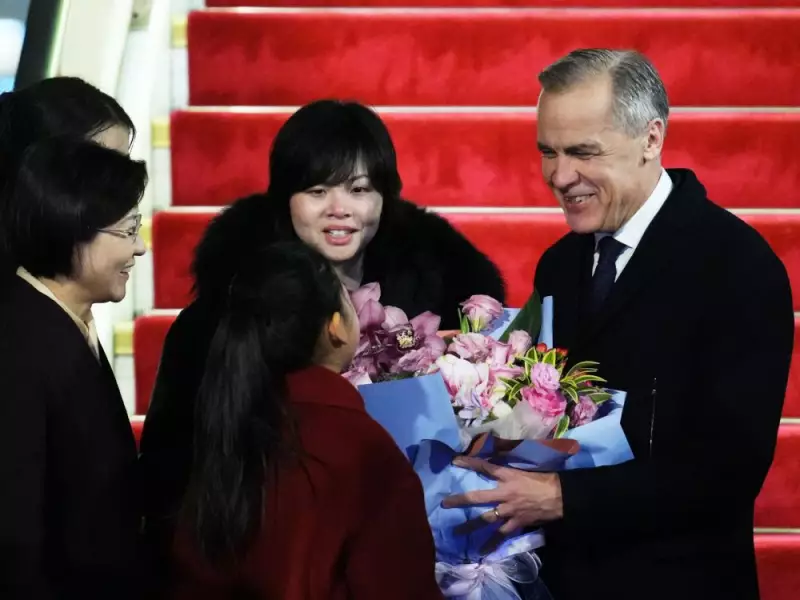
On Tuesday, January 12, 2026, Carney embarked on a global tour with signature stops in Beijing, China, and Doha, Qatar. The trip is officially billed as promoting economic resilience by attracting new investment and working toward the 2035 export goal. The Prime Minister is scheduled to conclude his journey at the World Economic Forum in Davos, Switzerland.
This focus on China continues a long-standing Liberal tradition. Former Prime Minister Jean Chrétien made four notable visits to China with his "Team Canada" trade missions. Similarly, Justin Trudeau traveled to China twice in 2016 and 2017 before relations deteriorated sharply following the arbitrary detention of Canadians Michael Kovrig and Michael Spavor in 2018.

Deepening Concerns Over Beijing's Global Role
In the years since the "Two Michaels" crisis, the geopolitical landscape has shifted dramatically. Critics point to China's strengthening alliance with Russia amid its war on Ukraine, its ties to Iran and North Korea, and its own aggressive posturing toward Taiwan and in the South China Sea.
Furthermore, a Canadian public inquiry concluded less than a year ago that China is "the most active perpetrator of foreign interference" targeting Canada's democracy. This finding makes Carney's outreach particularly contentious, especially as Foreign Affairs Minister Anita Anand has recently been non-committal on reaffirming the government's own 2024 assessment labeling China as "increasingly disruptive."
The article also criticizes the choice of Doha, referencing Qatar's government as "terrorist sympathizers."
The Tangled Web of Trade Retaliation
The economic relationship with China is currently hampered by significant trade barriers. China maintains tariffs of 76 to 100 percent on Canadian canola and 25 percent on pork and seafood, measures that have hurt Canadian farmers.
However, the article notes that this trade dispute was initiated by Canada, which imposed a 100 percent tariff on Chinese electric vehicles and a 25 percent levy on Chinese steel and aluminum. The argument is made that Carney could seek to de-escalate at any time by removing these Canadian tariffs, rather than embarking on a high-profile mission.
The core critique posits that in pursuing economic gains, the Prime Minister is compromising on principle. Instead of strengthening ties with democratic allies, the government is seen as courting regimes in Beijing and Doha, which are accused of undermining international norms and security.