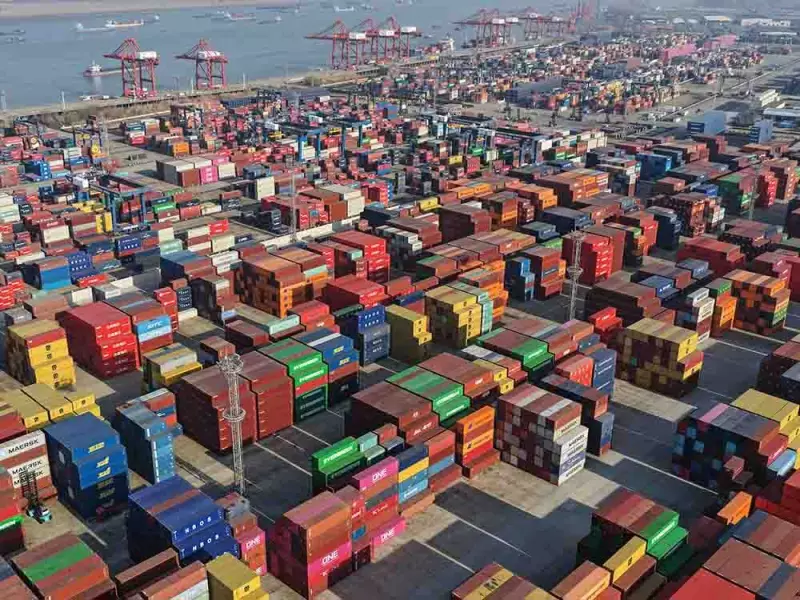
China's export engine demonstrated remarkable strength in 2025, powering the nation's trade surplus to a historic high of US$1.2 trillion despite ongoing geopolitical tensions and U.S. tariffs. This record performance, revealed in official data published on January 14, 2026, emerged as the most significant positive surprise for an economy grappling with domestic headwinds, offering a crucial buffer for the months ahead.
Export Resilience Defies Expectations
Defying widespread predictions of a slowdown, Chinese exports accelerated at the end of the year. Shipments grew by 6.6 per cent in December 2025, marking the fastest pace in three months and exceeding all forecasts in a Bloomberg economist survey. This surge was particularly notable given the high comparison base from late 2024, when Donald Trump's re-election as U.S. president triggered a wave of panicked, front-loaded orders.
The resilience has been a cornerstone of China's economic performance. "We expect export resilience to extend into this year, with exports remaining an important growth driver and partially offsetting weaker domestic demand," wrote economists at Barclays PLC, including Ying Zhang. A key strategy behind this boom has been the successful pivot by Chinese factories to deepen their presence in markets beyond the United States, effectively navigating the tariffs imposed during the Trump administration.

Shifting Markets and Moving Up the Value Chain
The composition and direction of China's trade have undergone a significant transformation. The combined increase in exports to Southeast Asia and Europe more than compensated for a deepening contraction in sales to the United States throughout 2025. Furthermore, a surge in shipments of higher-value goods underscores China's progress in moving up the manufacturing value chain.
Products such as semiconductors, cars, and ships recorded gains exceeding 20 per cent from the previous year. This advancement has also contributed to a reduction in imports for similar finished goods, like automobiles. Concurrently, as global supply chains reconfigure, the construction of factories overseas—often fueled by Chinese investment—is boosting demand for Chinese-made components, industrial equipment, and machinery.
Imbalances and Growing Global Backlash
The record surplus highlights a persistent and growing imbalance between China's formidable manufacturing sector and its stubbornly weak domestic consumption. This structural vulnerability, exacerbated by a prolonged property slump and falling domestic investment, is expected to persist. Weak appetite for foreign goods reduced imports such as crude oil, while deflation at home made Chinese products more competitively priced in global markets.
According to the International Monetary Fund (IMF), China's current account surplus—a broad measure of trade in goods and services—reached an estimated 3.3 per cent of GDP in 2025, its highest level since 2010. However, this export prowess is stirring anxiety and growing protectionist sentiments abroad as China redirects its vast industrial output to markets in Africa, Latin America, and elsewhere.
In response to rising trade tensions, Chinese authorities have begun to take measured steps, such as reducing export tax rebates for hundreds of products including solar cells and batteries. In a parallel development, the European Union is considering a minimum price system for Chinese electric vehicles as an alternative to imposing direct import tariffs, signaling ongoing negotiations to manage trade frictions.