

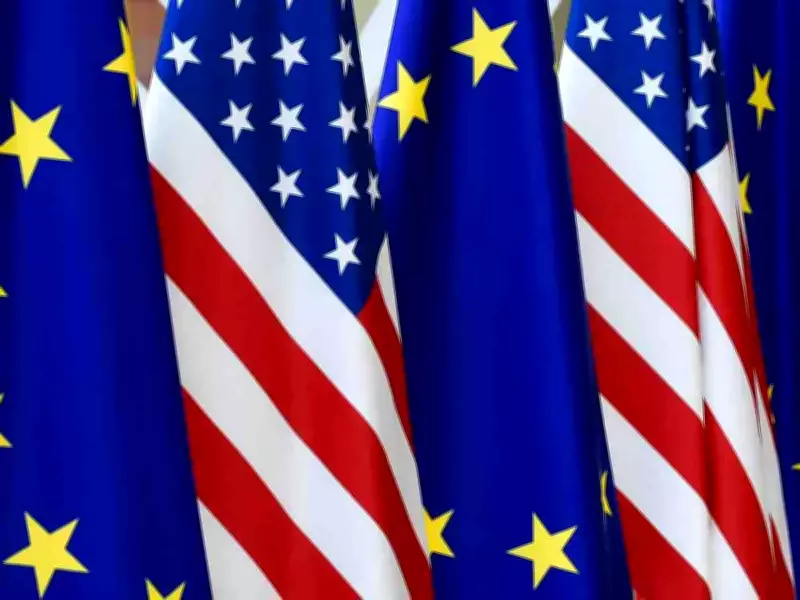
European Union Freezes U.S. Trade Agreement Ratification Amid Tariff Confusion
The European Union has officially suspended legislative work on ratifying its trade agreement with the United States, creating fresh economic turbulence in an already strained transatlantic relationship. This decisive move comes as European officials demand clear answers about President Donald Trump's upended tariff plans before proceeding with any decisions regarding the deal's approval.
Legislative Process Halted Following Supreme Court Ruling
EU lawmakers on Monday suspended all legislative work aimed at approving the trade pact, which was originally reached last summer but has never been fully implemented. This suspension occurred just days after the United States Supreme Court struck down Trump's use of emergency-powers legislation to impose his controversial reciprocal tariffs worldwide.
"We want to have clarity about the situation," declared European Parliament trade committee chair Bernd Lange during a critical meeting on Monday. "We want to have clarity from the U.S. that they are respecting the deal because that's a crucial element."

Market Reactions and Economic Implications
The uncertainty surrounding international trade relations immediately impacted financial markets, with both European stocks and the S&P 500 declining by 0.3 percent as cautious investors assessed the latest developments. This fresh delay extends what has already been a lengthy and complicated process for the trade agreement, threatening to reopen wounds in a relationship already suffering from multiple strains.
European Commission spokesperson Olof Gill emphasized the need for complete transparency, telling reporters on Monday: "Full clarity on what these new developments mean for the EU-U.S. trade relationship is the absolute minimum that is required for us as the EU to make a clear-eyed assessment to decide on the next steps. More is required for us to understand the full picture here."
Trump's Evolving Tariff Strategy Creates Confusion
Within hours of Friday's Supreme Court ruling, Trump announced he would impose a 10 percent global tariff, which he subsequently increased to 15 percent, leaving American trading partners with numerous unanswered questions. The president also stated he would preserve existing duties imposed under Sections 301 and 232 of trade law, while ordering the U.S. trade representative to launch new Section 301 investigations on an accelerated timeline.
These investigations require country-specific inquiries and findings of trade violations before tariffs can be imposed, potentially replacing the baseline rate eventually. However, Trump's remarks left considerable uncertainty about how such efforts might intersect with existing trade agreements between nations.
Potential Consequences of Failed Agreement
If the trade pact ultimately falls apart, it could significantly damage transatlantic relations that have already been tested by Trump's vacillation on Russia's war in Ukraine, his push to control Greenland, and his repeated insults directed at EU leaders. The European Commission, which reached the initial agreement with Trump as the EU's executive arm, is now actively trying to gather information from U.S. officials to understand the full implications of these developments.
Trump responded to the situation on his Truth Social platform, warning: "Any Country that wants to 'play games' with the ridiculous supreme court decision, especially those that have 'Ripped Off' the U.S.A. for years, and even decades, will be met with a much higher Tariff, and worse, than that which they just recently agreed to. BUYER BEWARE!!!"
The standoff represents a critical moment in international trade relations, with European officials insisting they must understand Trump's complete tariff strategy moving forward before making any decisions about the trade agreement's future. This development underscores the growing economic uncertainty created by shifting U.S. trade policies and their impact on global partnerships.






