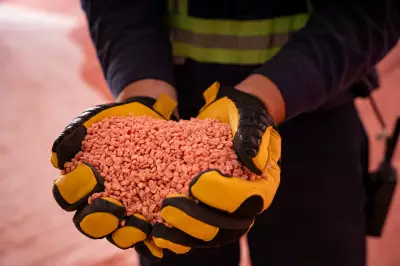
The European Union and the United States signed a landmark agreement on Friday to coordinate the supply of critical minerals essential for defense and high-tech industries, as concerns over China's dominance in this sector continue to grow.
Strategic partnership formalized
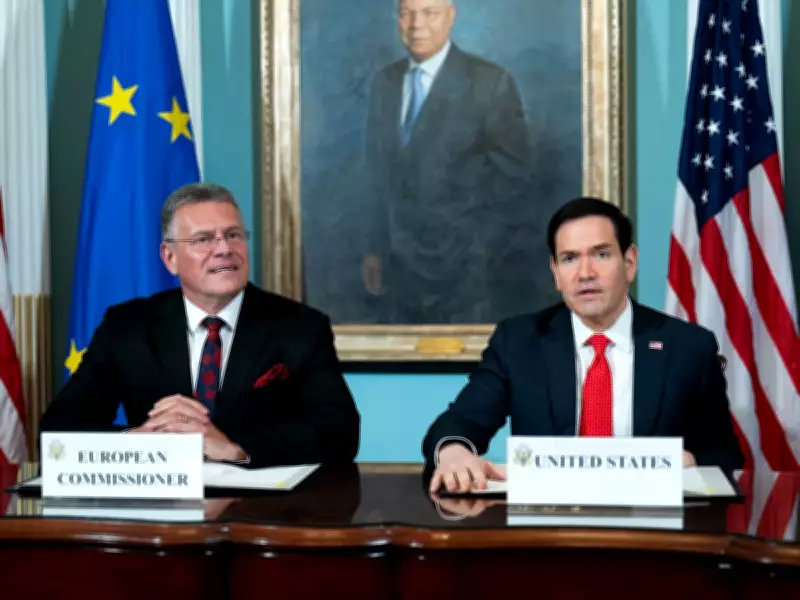
EU Trade Commissioner Maros Sefcovic and U.S. Secretary of State Marco Rubio signed a memorandum of understanding at the State Department in Washington, D.C., on April 24, 2026. The pact aims to ensure reliable access to minerals such as lithium, cobalt, and rare earth elements, which are vital for semiconductors, electric vehicle batteries, and weapons systems.
“The overconcentration of these resources, the fact that they’re dominated by one or two places, is an unacceptable risk,” Rubio stated during the signing ceremony.

China's export restrictions
Beijing has previously restricted exports of critical minerals during trade tensions, highlighting the vulnerability of Western supply chains. The agreement seeks to mitigate such risks by diversifying sources and reducing dependence on any single country.
Sefcovic emphasized that the partnership covers the entire value chain, from exploration and extraction to processing, refining, recycling, and recovery. “For us, it's really a matter of economic security. It's a matter of overcoming dependencies,” he said.
Key measures in the action plan
The action plan includes exploring minimum pricing for critical minerals to prevent market flooding by China or other powers. The EU and U.S. will also coordinate subsidies, stockpiles, and joint standards to facilitate trade across the Western world. Additionally, they plan to invest together in research and development.
“We have to make sure that these supplies and these minerals are available for our futures and in ways that are not monopolized in one place or concentrated heavily in one place,” Rubio added.
Broader alliance building
The Trump administration has previously called for a preferential trade zone among allies on critical minerals. Washington has also unveiled similar action plans with Mexico and Japan, along with a supply framework with Australia and other partners.
The U.S. Trade Representative's office stated that this plan will serve as the main mechanism to coordinate trade policies and measures on critical minerals supply chains, with the goal of concluding a binding plurilateral agreement on trade.
“We know how dependencies could be expensive, and we have a huge price tag for being dependent on the sources of our fossil fuels,” Sefcovic noted, drawing lessons from past energy reliance. “We simply want to learn from that experience and have a much more diversified portfolio of suppliers.”