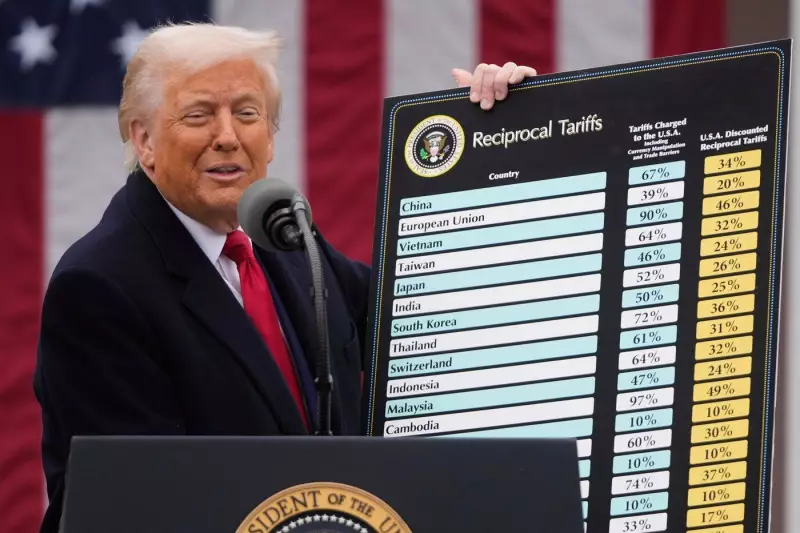
The U.S. Supreme Court's decision to delay its ruling on the legality of tariffs implemented during the Trump administration provides no indication of how the justices will ultimately decide, according to a leading constitutional law expert.
Timing of Ruling Reveals Nothing
Jeremy Paul, a professor of constitutional law, stated that the court's timing offers no clue to its final judgment. The delay itself is a procedural step and should not be interpreted as a signal of the court's leanings on the complex trade matter. The case, which challenges the legal foundation of the tariffs, remains pending without a clear timeline for a resolution.
Background of the Tariff Dispute
The tariffs in question were a cornerstone of the previous U.S. administration's trade policy, affecting billions of dollars in global commerce and sparking numerous international disputes. Their legality has been contested in lower courts, with the Supreme Court's eventual decision poised to have significant repercussions for U.S. trade authority and international economic relations.

Professor Paul emphasized that the Supreme Court often takes its time with cases of this magnitude, involving intricate questions of presidential power and congressional authority over trade. The delay is a standard part of the judicial process, especially for rulings that could set major legal precedents.
Implications for Trade Policy
The ongoing uncertainty leaves businesses and trading partners, including Canada, in a state of limbo regarding long-term policy. A ruling against the tariffs' legality could unravel a key policy tool, while an affirmation would solidify executive power in setting trade terms. Experts warn that the outcome will directly impact cross-border supply chains, pricing, and economic planning on both sides of the border.
As the court deliberates, stakeholders are advised to prepare for multiple potential outcomes. The lack of a clear signal from the delay, as noted by Professor Paul, means all possibilities remain on the table until the justices publish their formal opinion.