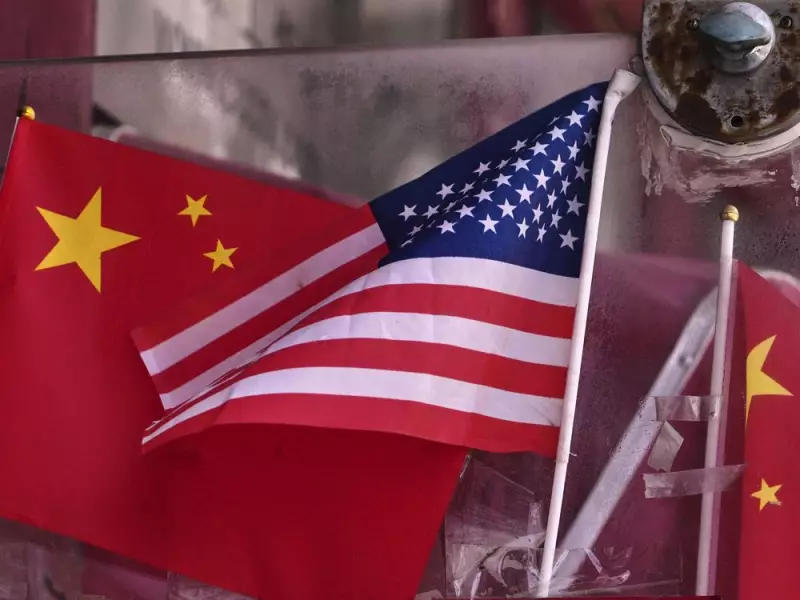
Canada finds itself navigating a complex and high-stakes diplomatic tightrope, caught between trade negotiations with the world's two largest economies: the United States and China. In an era of significant geopolitical tension, crafting a strategy that protects Canadian interests is paramount, according to Linda Hasenfratz, Executive Chair of global manufacturing giant Linamar.
The Paramount Priority: Securing North American Trade
Hasenfratz emphasizes that renewing the Canada-U.S.-Mexico Agreement (CUSMA) must be the nation's absolute top trade priority. With discussions looming, now is not the time to antagonize our largest and most critical trading partner. While diversifying into other global markets is a sound long-term strategy, it cannot replace the foundational economic relationship with the United States.
The data underscores this interdependence: the U.S. exports more goods to Canada than it imports, eight million American jobs are linked to trade with Canada, and Canada is the number one customer for 36 U.S. states. Hasenfratz argues it is Canada's job to forcefully remind the U.S. of this vital partnership. "If the conditions are right, mutual respect is restored, irritants are eliminated and trade is fair, why spend billions to find new supply sources when a reliable, trusted trading partner is on your doorstep already tooled up and ready to roll," she writes.

Threading the Needle with China
Simultaneously, Canada must resolve strained relations with China, the world's second-largest economy. The current flashpoint involves 100 per cent tariffs on Chinese-built electric vehicles, imposed by Canada in alignment with U.S. policy. This has triggered Chinese retaliatory restrictions on Canadian canola exports, dealing a major blow to a key domestic agricultural sector.
The central challenge, as framed by Hasenfratz, is clear: How does Canada reopen canola trade and build additional ties with China without jeopardizing the indispensable relationship with the United States?
Practical Solutions for a Delicate Balance
Hasenfratz proposes actionable solutions. First, she suggests Canada could strategically reduce its EV tariff on China from 100 per cent to, for example, 50 per cent. She posits that this specific issue is not a core concern for U.S. leadership, and such a move could immediately restart lucrative canola sales to China—a net gain for Canada.
To address competitiveness concerns against subsidized Chinese vehicles, she recommends mandating that a portion of vehicles sold here be built in Canada, meeting North American content rules. Additionally, she advocates for government support to help Canadian EV manufacturers invest in leading-edge technology.
Secondly, Hasenfratz points to a major irritant for the U.S.: Canada's protectionist dairy supply management system. She suggests a tough but pragmatic trade-off may be necessary, framing it as a stark choice: "Do we want cows or do we want cars?" Addressing this longstanding issue could significantly smooth CUSMA renewal talks.
Ultimately, Hasenfratz's analysis, published on January 15, 2024, calls for clear-eyed pragmatism. Canada must employ nuanced diplomacy and make calculated concessions to secure its economic future between these two global giants, prioritizing the North American partnership while carefully managing a crucial Asian relationship.