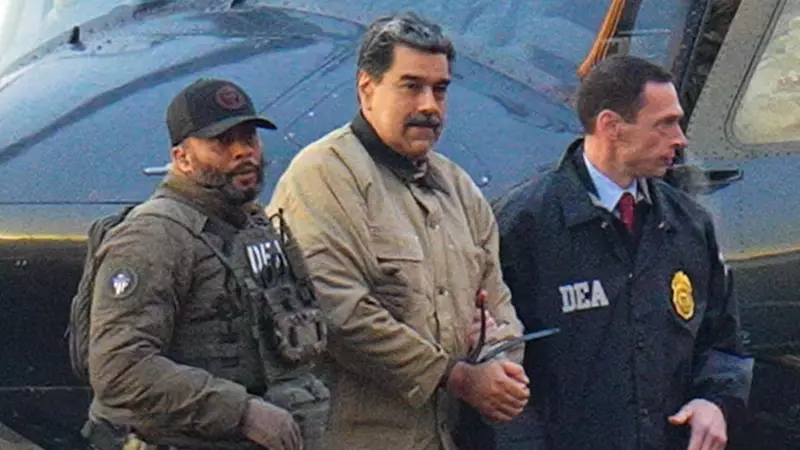
The global energy and investment landscape is undergoing a significant shift following a series of bold moves by the United States against the Venezuelan government. The catalyst was the dramatic arrest of President Nicolás Maduro, who was seen in handcuffs after landing at a Manhattan helipad on January 5, 2026, escorted by heavily armed federal agents.
U.S. Asserts Control Over Venezuelan Energy Assets
Concurrent with the legal action against Maduro, the United States has initiated a forceful campaign to assert control over Venezuelan oil resources on the world stage. This strategy involves the seizure and subsequent sale of Venezuelan oil tankers internationally. The objective is clear: to cripple the economic engine of the Maduro regime and redirect the flow of revenue.
This aggressive posture represents a major escalation in long-standing tensions and has sent immediate ripples through global commodity markets. Analysts note that by directly targeting oil shipments, the U.S. is applying maximum financial pressure, which has created both uncertainty and opportunity for energy traders and national economies reliant on stable crude supplies.

Investors Pivot Towards Broader Latin American Markets
In response to these geopolitical tremors, international investors are rapidly reassessing their portfolios. The prevailing sentiment, as reported, is growing bullishness on Latin America as a whole. While Venezuela faces intense isolation and asset freezes, capital is seeking new, stable havens within the region.
Countries with robust energy sectors, favorable investment climates, and political stability relative to Venezuela are poised to benefit. This investor pivot is not merely about fleeing risk but about strategically capitalizing on the vacuum created and the potential for realigned trade partnerships and energy supply chains.
Implications for Canada and Global Trade
The situation holds particular relevance for Canada, a major energy producer and trading nation. Shifts in global oil flows can impact pricing and market access for Canadian crude. Furthermore, Canadian investors and pension funds with significant international holdings are likely scrutinizing their exposure and seeking new growth opportunities in the wake of this market realignment.
The U.S. actions also underscore the continued use of economic and legal tools as instruments of foreign policy. The image of a head of state detained on foreign soil marks an unprecedented moment, signaling a new phase of enforcement that could influence international relations and cross-border investment strategies for years to come. The full long-term consequences for regional stability and global energy security remain to be seen.