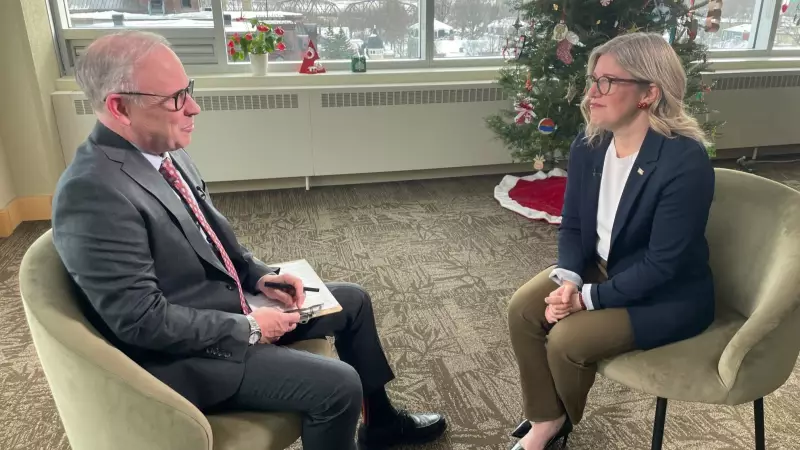
New Brunswick Premier Susan Holt has issued a pressing call for the federal government to secure a new softwood lumber agreement with the United States, emphasizing that the province needs a resolution soon. The premier's statement highlights the ongoing economic pressure on one of the region's key industries.
Economic Pressure on the Forestry Sector
In a recent interview, Premier Holt stressed the immediate need for a deal to manage tariffs on softwood lumber exports to the United States. The longstanding trade dispute has created significant uncertainty for producers in New Brunswick, who rely heavily on the U.S. market. The premier indicated that further delays could jeopardize jobs and economic stability in forestry-dependent communities across the province.
The interview, conducted with Todd Battis, was published on December 30, 2025. Holt's comments come amidst a complex international trade landscape where Canadian softwood has been subject to contentious U.S. duties for years. She argued that New Brunswick's forestry operators require predictable trade rules to plan for the future and invest with confidence.

The Call for Federal Action
While the negotiation of international trade agreements falls under federal jurisdiction, Premier Holt made it clear that provincial interests must be strongly represented at the table. Her advocacy signals a concerted push from Atlantic Canada for the federal government to prioritize this issue in discussions with American counterparts. The lack of a stable agreement leaves the province's lumber industry vulnerable to shifting trade policies and potential market disadvantages.
The softwood lumber dispute is one of the most persistent trade issues between Canada and the United States. New Brunswick, with its substantial forestry sector, feels the impact of tariffs acutely. Holt's public statement is seen as an effort to accelerate negotiations and secure a favorable outcome for local mills and workers.
What a Deal Would Mean for New Brunswick
A renewed and fair softwood lumber agreement would provide much-needed stability. It would allow companies in New Brunswick to export without the burden of crippling tariffs, supporting rural economies and maintaining the province's competitive edge. The premier's message is unequivocal: the time for a deal is now, not later.
The outcome of these trade talks will have direct consequences for investment, employment, and economic growth in the region. As Premier Holt concludes, securing this agreement is not just a trade matter but a critical component of supporting the livelihoods of thousands of New Brunswickers.