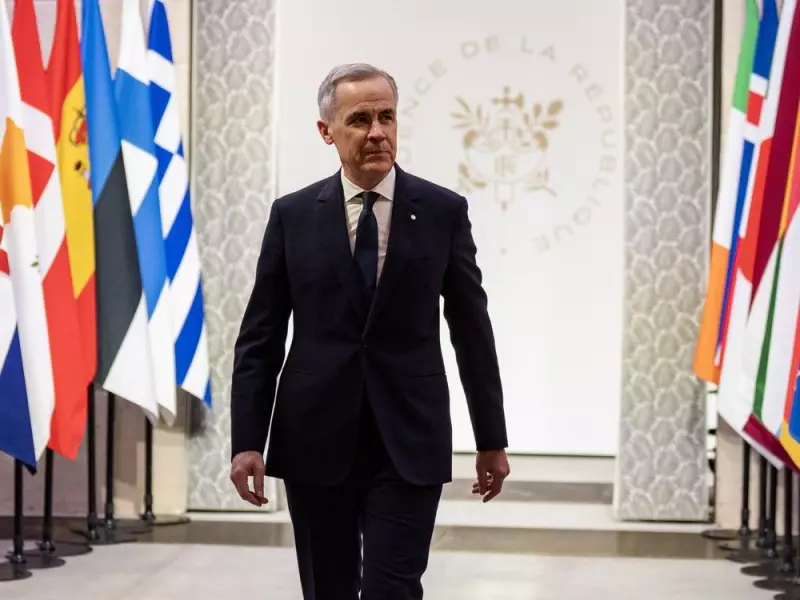
Prime Minister Mark Carney will embark on an official visit to China next week, marking a significant step in Ottawa's efforts to mend a fractured relationship with Beijing and reduce Canada's heavy economic reliance on the United States.
A Diplomatic Thaw After Years of Strain
This trip, scheduled for the week of January 12, 2026, will be the first by a Canadian prime minister to China in nearly a decade. The lengthy hiatus followed a major diplomatic crisis sparked in 2018 by Canada's arrest of Huawei Technologies Co. executive Meng Wanzhou on a U.S. extradition warrant.
In retaliation, China detained two Canadians, Michael Kovrig and Michael Spavor, holding them until a deal for Meng's release was finalized with U.S. prosecutors in 2021. The episode plunged bilateral relations to a historic low.

Carney's office confirmed he will meet with Chinese President Xi Jinping during the visit. Discussions are expected to cover a broad agenda including trade, energy, agriculture, and international security matters.
Navigating a Web of Tariffs and Trade Tensions
The push for reconciliation comes against a complex backdrop of recent trade disputes. In 2024, Canada increased import taxes on Chinese electric vehicles, steel, and aluminum, a move partly designed to align with U.S. trade policy.
China responded with new duties on Canadian agricultural exports, notably on canola, a vital crop also known as rapeseed. This tit-for-tat has caused internal friction within Canada, with political leaders in western prairie provinces accusing the federal government of sacrificing canola farmers to protect Ontario's auto and steel industries.
Further complicating matters, Carney's government took additional measures last year to limit steel shipments from China and other nations. This action came after the White House, under President Donald Trump, imposed a steep 50% tax on foreign steel.
Trump's broader tariff strategy, targeting steel, aluminum, autos, and lumber, has ignited a fresh urgency in Ottawa to diversify Canada's trade partnerships. Carney has publicly set a goal of doubling Canada's non-U.S. exports over the next ten years.
Laying the Groundwork for a New Chapter
Since assuming office in March of last year, Prime Minister Carney has deliberately worked to lower tensions with Beijing. A formal meeting with President Xi during the Asia-Pacific Economic Cooperation summit in South Korea in October 2025 was hailed by Carney as "a turning point in the relationship." It was during that encounter that Xi extended the invitation for this upcoming state visit.
In preparation, Canadian government officials and politicians have made several trips to China over recent months. Carney has pointed to specific opportunities for growth, particularly in agricultural and energy trade.
The expanded Trans Mountain pipeline to Canada's Pacific coast has already facilitated record oil exports to China. Carney's administration is now working to clear regulatory hurdles for a potential new pipeline, a project whose proponents argue is even more critical following Trump's recent intervention in Venezuela, which threatens global oil supply chains.
Despite the tensions, China remains Canada's second-largest trading partner after the U.S. Total merchandise trade between the two nations reached 118 billion Canadian dollars (approximately $85.8 billion USD) in 2024, according to official Canadian data. This visit represents a high-stakes attempt to stabilize and grow that crucial economic relationship for the future.