Quebec Business Leaders Welcome U.S. Supreme Court Tariff Ruling with Cautious Hope
Politicians and business groups across Quebec expressed measured optimism on Friday after the United States Supreme Court delivered a landmark ruling declaring President Donald Trump's emergency tariffs on Canada illegal. The 6-3 decision, authored by conservative Chief Justice John Roberts, represents a significant legal victory but leaves many trade challenges unresolved for Canadian industries.
Court Rejects Trump's Emergency Powers Argument
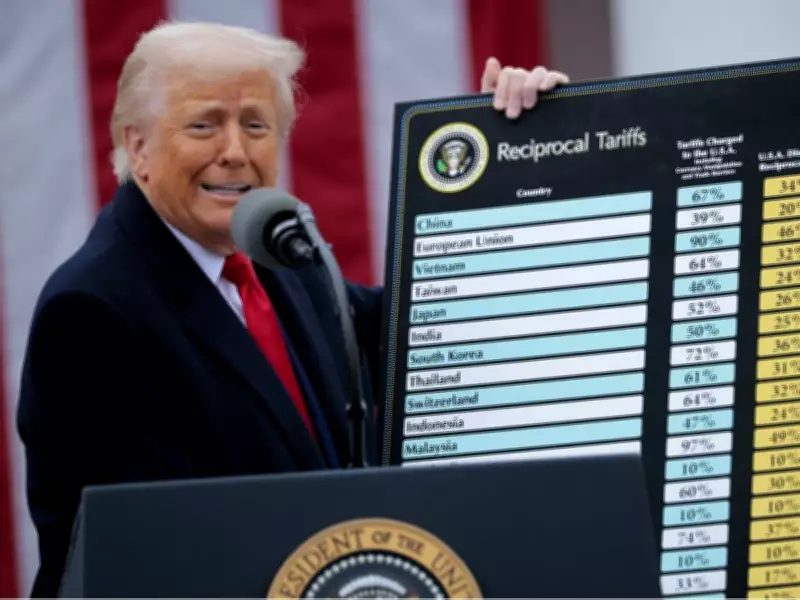
The Supreme Court determined that Trump's use of the International Emergency Economic Powers Act (IEEPA) to impose his so-called Liberation Day tariffs was unlawful because Congress had not authorized such actions. The administration had argued these emergency powers allowed unilateral tariff imposition, citing national security concerns about dangerous drugs like fentanyl entering the country.
Business representatives quickly noted that the words "tariff" or "duty" never actually appear in the IEEPA legislation. The United States had collected more than US$133 billion from these tariffs by December, according to CNBC reports. Major retailers including Costco are now expected to seek refunds following the court's decision.

Mixed Reactions from Canadian Officials and Business Groups
While welcoming the ruling, Canadian officials emphasized that significant trade barriers remain unaffected. "The United States Supreme Court's decision reinforces Canada's position that the IEEPA tariffs imposed by the United States are unjustified," stated Canada-U.S. Trade Minister Dominic LeBlanc on social media.
LeBlanc added: "While Canada has the best trade deal with the United States of any trading partner, we recognize that critical work lies ahead to support Canadian businesses and workers who remain affected by Section 232 tariffs on steel, aluminum and automotive sectors."
The ruling specifically addresses only tariffs imposed under emergency powers, leaving untouched separate duties affecting Canadian steel, aluminum, automobiles, lumber and other key industries.
Quebec Business Perspective: A Step Forward, Not a Solution
Caroline Senneville, president of the CSN labor federation, characterized the decision as "a good first step" while emphasizing ongoing challenges. "We salute the decision from the U.S. Supreme Court, but not everything is settled for the Quebec economy," she stated. "A number of important American tariffs continue to affect many sectors, including aluminum, steel, copper and forestry products."
Norma Kozhaya, vice-president for research and chief economist at the Conseil du patronat du Québec, which represents business owners across the province, called the ruling "important" for establishing clearer trade frameworks. "This decision sends a positive signal, but at the same time we have to remember that important sectors remain affected," she told The Gazette.
Kozhaya explained that the tariffs invalidated by the court were those not covered by the Canada-United States-Mexico Agreement (CUSMA), and expressed concern that the Trump administration might pursue alternative methods to impose similar trade restrictions. "I'm not an expert, but I think he wants to be able to impose them. If he will succeed, that will be another story," she noted.
Broader Implications for Trade Relations
The Supreme Court decision arrives during a period of transformation in Canada-U.S. relations, coinciding with the approaching first joint review of the CUSMA agreement. Canadian officials emphasized their continued efforts to "create growth and opportunities on both sides of the border, while strengthening our collaboration with reliable trading partners and allies around the world."
Business leaders acknowledged the ruling's importance in limiting presidential executive powers while maintaining realistic expectations about ongoing trade negotiations. The decision provides legal clarity but doesn't eliminate the complex web of tariffs affecting numerous Quebec industries that depend on cross-border trade.

As Quebec's business community processes this development, attention now turns to how both governments will navigate the remaining trade barriers and what additional measures might be necessary to support affected industries and workers in the coming months.