In a landmark decision, the United States Supreme Court declared on Friday that former President Donald Trump's imposition of tariffs under the International Emergency Economic Powers Act (IEEPA) was unconstitutional. However, this ruling offers little immediate relief for Canada, as the most impactful tariffs on key industries such as steel, aluminum, autos, and lumber remain firmly in place.
Court Ruling Falls Short for Canadian Economy
The Supreme Court's 6-3 decision, authored by Chief Justice John Roberts and supported by Trump appointees Justices Amy Coney Barrett and Neil Gorsuch, stated that the IEEPA does not grant the president authority to levy such tariffs. Despite this legal setback, Trump swiftly announced plans to implement a new 10% global tariff under the 1974 Trade Act, which can be enforced for up to 150 days unless extended by Congress.
For Canada, the celebration is muted. The tariffs struck down by the court applied to very few Canadian products, with over 85% of exports to the U.S. protected under the Canada-United States-Mexico Agreement (CUSMA). The significant duties affecting Canada—including 25% on assembled vehicles, 50% on steel and aluminum, and 45% on softwood lumber—were imposed under different legal frameworks and were not part of this ruling.

Political Reactions and Ongoing Challenges
Canadian officials responded with a mix of optimism and realism. Dominic LeBlanc, the cabinet minister overseeing Canada-U.S. trade, acknowledged that the court decision strengthens Canada's position against IEEPA tariffs but emphasized that the major economic hurdles persist. "We recognize that there is still much to be done to support Canadian businesses and workers affected by the tariffs on steel, aluminum, and automotive sectors," LeBlanc stated.
Ontario Premier Doug Ford hailed the ruling as "another important victory" but stressed the need to continue fighting the remaining tariffs. The consensus among experts is clear: relief for Canada's industries will not come through court challenges but through negotiated settlements.
Trump's Response and Future Implications
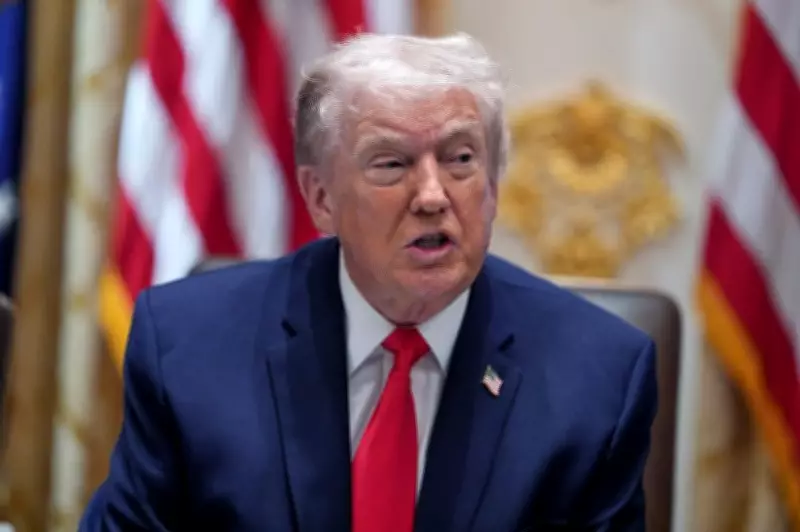
Following the Supreme Court's decision, Trump expressed disappointment, calling it "incorrect," but assured that his administration has "very powerful alternatives." His move to impose a 10% global tariff underscores the ongoing trade tensions, which could further complicate bilateral relations.
The path forward for Canada involves intensified diplomatic efforts. Critics note that while LeBlanc recently led a large delegation to Mexico, similar initiatives have been lacking for Washington. As tariffs continue to strain the economy, the focus must shift to securing a comprehensive trade deal that addresses these persistent barriers.
In summary, while the Supreme Court's ruling marks a legal rebuke to Trump's tariff policies, it does little to alleviate the economic pressure on Canada. The enduring tariffs on critical sectors highlight the need for proactive negotiation and sustained engagement with U.S. counterparts to foster fair trade practices.