Former U.S. President Donald Trump has issued a starkly dismissive assessment of the North American free trade pact, declaring the Canada-U.S.-Mexico Agreement (CUSMA) largely irrelevant to the United States and setting the stage for a potentially turbulent renegotiation process this year.
"We Could Have It or Not": Trump's Indifference
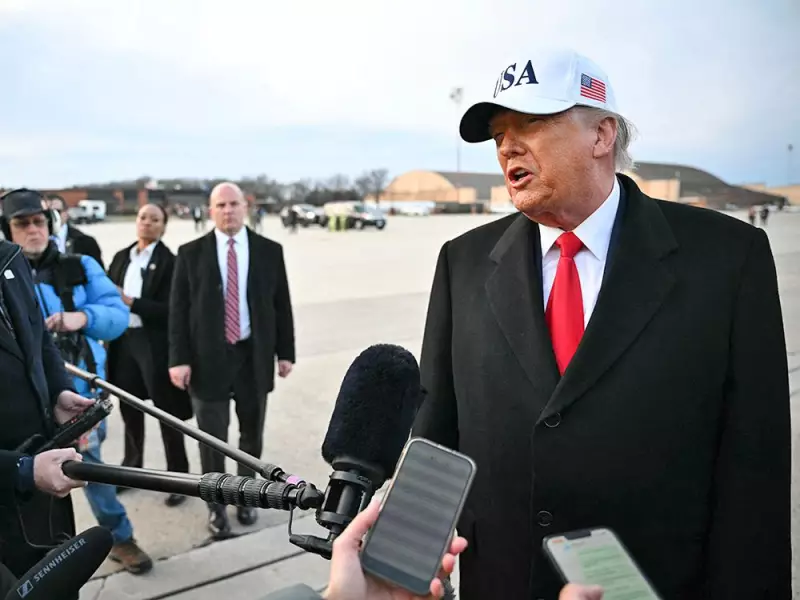
Speaking to reporters on January 13, 2026, after a visit to a Ford Motor Co. plant, Trump expressed profound indifference toward the trade accord he originally signed in 2020. When questioned about engaging in the pact's mandatory review or allowing it to lapse, he stated, "We could have it or not, it wouldn’t matter. It’s irrelevant."
Trump argued the deal primarily benefits Canada, but claimed Americans "don’t need their product" because companies are relocating to the United States. He further solidified his position by adding, "I don’t even think about CUSMA... The problem is we don’t need their product. You know, we don’t need cars made in Canada. We don’t need cars made in Mexico. We want to make them here."

The Looming Renegotiation and Economic Risks
These comments serve as a direct warning to officials in Ottawa and Mexico City, who have navigated Trump's unpredictable trade policies since his return to office a year ago. The scheduled review of CUSMA, which replaced the 1992 NAFTA, could now devolve into a forum for airing U.S. grievances.
The agreement faces a mandatory review in 2026. If all three nations agree to renew it before July 1, it will be extended for another 16 years. Failure to reach a consensus triggers annual joint reviews until approval is granted or the pact expires in 2036.
Separately, the deal allows any country to exit with six months' written notice. The prospect of Trump terminating the agreement injects severe tension into the process, threatening to devastate the Canadian and Mexican economies and disrupt deeply integrated supply chains, particularly in the auto manufacturing sector.
A Pattern of Undermining the Pact
This is not the first time Trump has challenged the trade framework during his second term. He has previously imposed and then scaled back new tariffs on Mexican and Canadian goods, citing fentanyl trafficking concerns, before exempting products covered under CUSMA.
His latest remarks signal that the upcoming renegotiation may be lengthy and contentious, forcing Canada to prepare for a high-stakes diplomatic and economic confrontation. The stability of North American trade, upon which countless industries and jobs depend, now hangs in the balance as Trump reaffirms his "America First" approach.