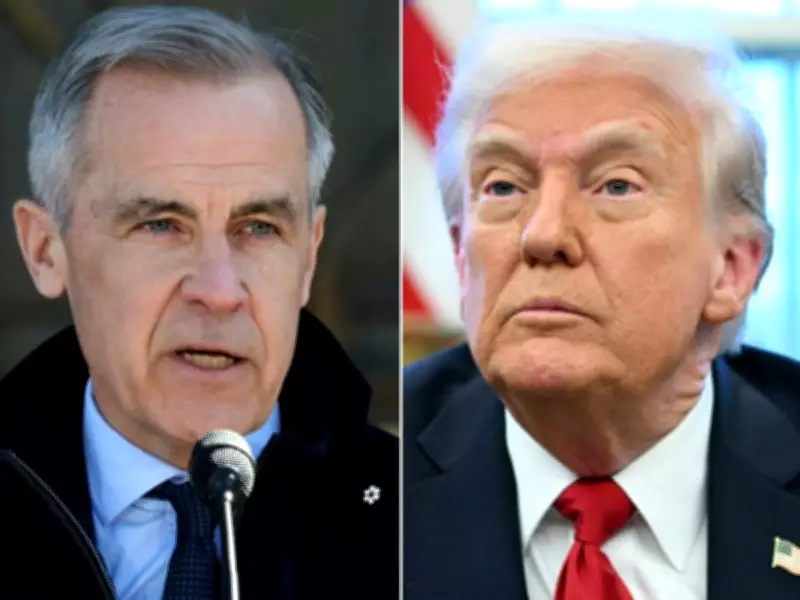
In a stark rebuke from Washington, a top official in the Trump administration has publicly criticized Canada's trade strategy, delivering harsh words as Prime Minister Mark Carney prepares to host global investors in Toronto later this year.
Washington's Blunt Assessment
During the Semafor World Economy Forum in Washington, D.C., U.S. Commerce Secretary Howard Lutnick offered a blunt assessment of Canada's approach to trade relations. When questioned about the future of the Canada-United States-Mexico Agreement (CUSMA), Lutnick revealed President Donald Trump's perspective on the current arrangement.
"I think he thinks it's a bad deal," Lutnick stated, acknowledging that while certain aspects like energy trade remain vital to the United States, other components of the agreement face significant criticism from the American side.

The Commerce Secretary emphasized that the trade pact requires substantial revision, stating, "I think it needs to be reimagined and needs to be readdressed. There's plenty of good in it but there's a huge amount of bad in it and needs to be reconsidered for benefit of America."
A Strategy Deemed Ineffective
Lutnick specifically targeted what he described as Canada's strategy of waiting for political changes in Washington, suggesting this approach represents flawed policy for the northern neighbor. Using particularly colorful language, the Trump official dismissed the tactic as ineffective.
"That is like the worst strategy I've ever heard. They suck," Lutnick declared during the forum discussion.
This waiting strategy appears to reflect the Carney government's hope that Republican losses in upcoming midterm elections might force policy reversals on issues like tariffs affecting Canadian trade. However, this approach mirrors previous Canadian diplomatic efforts that relied heavily on Democratic electoral success during the last presidential cycle.
Canada's Diplomatic Challenges
According to reports, Canada's embassy made minimal outreach to Republican officials regarding free trade advocacy until relatively late in previous negotiations. Now, the current government appears to be banking once again on favorable Democratic performance in the November elections.
While Prime Minister Carney has frequently stated that "hope is not a strategy," current circumstances suggest limited alternatives beyond optimistic electoral projections. Current polling shows Donald Trump with relatively low approval ratings, and Democrats leading in generic ballot questions by more than five percentage points.
Nevertheless, when evaluating both major American political parties, neither enjoys strong popularity according to RealClearPolling.com data, with Democrats actually registering lower favorability than Republicans in some measurements.
Investment Summit Amid Capital Flight
Against this challenging diplomatic backdrop, Prime Minister Carney plans to invite approximately one hundred of the world's most significant investors to Toronto for a September summit. This initiative follows a concerning Royal Bank of Canada report documenting substantial investment outflows from the country.
The RBC analysis revealed that between 2015 and 2024, more than $1 trillion in investment capital departed Canada, describing this movement as "the largest capital exodus in Canadian history." The report further noted that for every dollar of foreign direct investment entering Canada, two dollars exited the country during this period.
Market Access as Critical Factor
As Carney and Canadian business leaders have engaged with potential investors across Asia, Europe, and the Middle East, a consistent message has emerged regarding Canada's investment appeal. International investors consistently emphasize that American market access represents a crucial determinant of Canada's attractiveness as an investment destination.
Without reliable access to the United States market, Canada's appeal for business establishment diminishes significantly. This reality underscores why enhanced diplomatic engagement with Washington remains essential for securing both existing trade relationships and future economic opportunities.

Despite these economic imperatives, political calculations may be influencing current strategy. Some observers suggest that confrontation with Washington, while potentially damaging economically, might offer domestic political advantages that currently take precedence in government decision-making.