In a dramatic escalation of a long-standing diplomatic standoff, U.S. President Donald Trump has announced punitive tariffs targeting eight European nations that are supporting Denmark in its refusal to sell Greenland. The move, announced on January 17, 2026, threatens to severely strain relations between the United States and some of its closest NATO allies.
Tariff Threat as Leverage for Territory
President Trump declared via a social media post that a 10 per cent tariff will be imposed on goods from the targeted countries starting February 1, 2026. He further threatened to raise that tariff to a punishing 25 per cent by June 2026 unless and until "a Deal is reached for the Complete and Total purchase of Greenland."
The countries facing these new trade penalties are: Denmark, Norway, Sweden, France, Germany, the United Kingdom, the Netherlands, and Finland. This list includes several core members of the North Atlantic Treaty Organization (NATO), the military alliance founded in part to provide collective security against external threats.

Legal and Diplomatic Uncertainty
The announcement immediately raised significant questions about its legal foundation and practical implementation. It is not clear what authority President Trump would use to enact these country-specific tariffs within the European Union's common trade framework.
The White House did not immediately provide additional details or clarification. Analysts note that Trump has previously relied on the International Emergency Economic Powers Act for similar economic threats. However, the use of that very authority is currently the subject of a landmark U.S. Supreme Court case, with a ruling expected soon that could undermine this latest threat.
An alternative legal tool the administration has considered, known as Section 122 powers, would cap any such tariffs at 15% for a maximum of 150 days—far short of the 25% indefinite tariff Trump has threatened.
"The Pandora’s box of tariffs has been reopened — and the stakes are higher, with an unprecedented level of brutality," said Simone Tagliapietra, a senior researcher at the Bruegel think tank in Brussels. "Europe now has no choice but to confront this hostile act with strength and without hesitation."
Background of a Frozen Conflict
This explosive tariff threat follows a week of diplomatic meetings in Washington. Danish Foreign Minister Lars Lokke Rasmussen and Greenland’s Foreign Minister, Vivian Motzfeldt, met with top Trump administration officials and members of Congress in an attempt to manage the dispute.
While both sides agreed to establish a working group to handle the diplomatic rift, the fundamental stalemate remains. Denmark and the autonomous government of Greenland have consistently and firmly rejected the idea of selling the strategically important, resource-rich island.
The tension underscores a pattern of the Trump administration using trade as a tool for geopolitical objectives, often disregarding existing agreements. This latest move contradicts trade deals already struck, such as with the U.K., and casts a shadow over ongoing negotiations with other partners, including Canada and Mexico, regarding the continental trade pact.
The tariff announcement also comes despite a July trade accord between the U.S. and the E.U., which imposed a 15% tariff on most European goods and 50% on steel and aluminum. That agreement, which angered the Trump administration by remaining unratified by the European Parliament, is now overshadowed by this new, more aggressive threat.
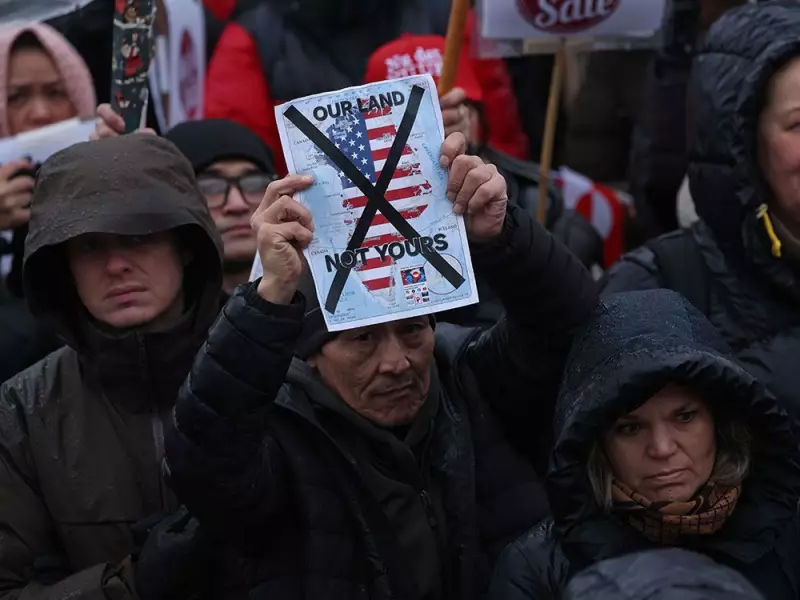
As protests in Greenland continue under banners declaring "Our Land, Not Yours," the international community watches to see if economic coercion can succeed in prying territory from a steadfast ally, setting a potentially dangerous precedent within the Western alliance.