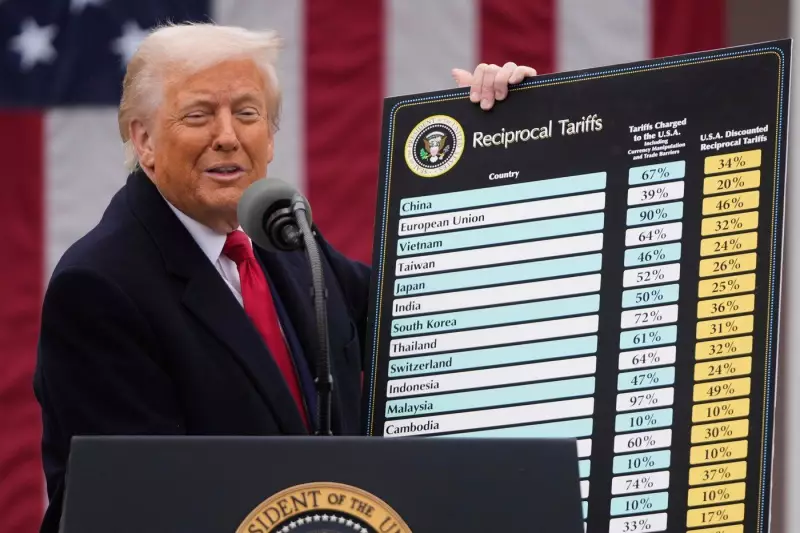
In 2025, former President Donald Trump returned to the White House and immediately reshaped the trade policy conversation with a series of aggressive tariff announcements and threats. However, a review of the year reveals that several of the most significant proposed levies never transitioned from rhetoric to reality.
The Rose Garden Announcements and Unrealized Plans
On April 2, 2025, President Trump stood in the White House Rose Garden to announce new tariffs, setting a tone for his economic agenda. This event, captured by AP photographer Mark Schiefelbein, signaled a return to the protectionist trade policies that defined his first term. Throughout the year, the administration floated tariffs targeting a range of trading partners and specific industries, from automotive and steel to consumer electronics and agricultural products.
Despite the bold declarations, many of these proposed measures stalled. Analysts point to several factors, including intense lobbying from affected domestic industries, concerns about retaliatory measures from key allies, and the complex logistical challenges of implementing sweeping new trade barriers. The gap between threat and action became a defining feature of the year's trade policy landscape.

Key Threats That Faded Away
While the administration followed through on some tariffs, a notable number of the most headline-grabbing threats did not materialize by year's end. These included proposed blanket tariffs on entire nations that are major US trade partners, as well as specific, punitive levies on sectors already struggling with supply chain issues.
The non-implementation of these threats provided temporary relief to businesses that rely on global supply chains, but also created an environment of uncertainty. Companies were forced to factor in the potential for sudden policy shifts, complicating long-term planning and investment. This uncertainty had ripple effects in Canada and other close trading partners, where economies are deeply integrated with the United States.
The Impact of Unfulfilled Promises
The pattern of announced but unimplemented tariffs in 2025 highlights the difference between political messaging and governing reality. While the threats succeeded in putting trading partners on notice and appealing to a political base, the practical and economic consequences of following through often proved too significant.
For the international community, particularly treaty allies like Canada, the year demonstrated the ongoing volatility in US trade policy. The episode underscores the challenges businesses face when geopolitical rhetoric outpaces policy execution, leaving them in a perpetual state of preparing for disruptions that may never arrive. As 2026 begins, the legacy of 2025's unrealized tariff threats is a trade environment still marked by caution and contingency planning.