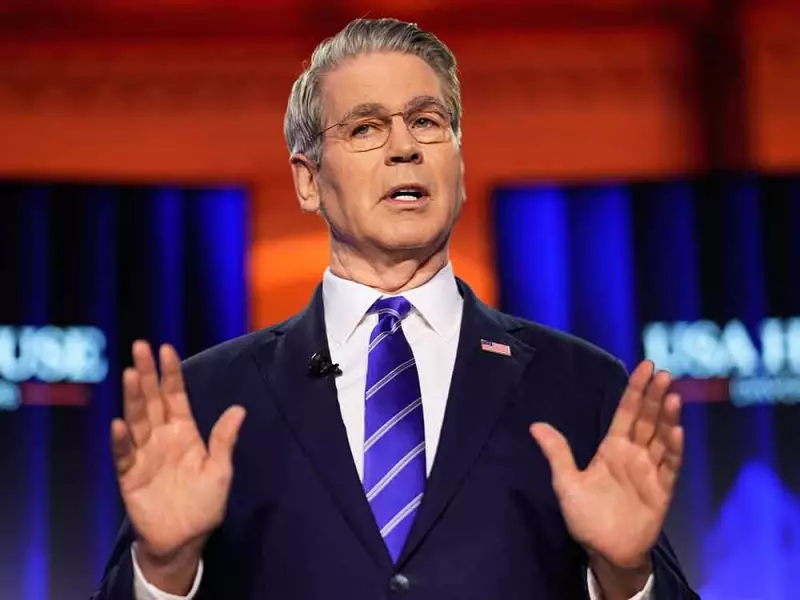
U.S. Treasury Secretary Accuses Canada of Trade Policy Reversal on China
United States Treasury Secretary Scott Bessent has publicly suggested that Canadian Prime Minister Mark Carney executed a significant policy reversal by negotiating a trade agreement with China to reduce certain barriers. This criticism comes amid escalating trade tensions and reinforces recent tariff threats from the Trump administration against Canada.
Bessent's 'About-Face' Allegation and Tariff Warnings
During an appearance on ABC's This Week program, Bessent pointed to what he characterized as contradictory actions by the Canadian government. "The Canadians a few months ago joined the U.S. in imposing high steel tariffs on China due to dumping concerns," Bessent stated. "The Europeans followed suit. Now, it appears Prime Minister Carney may have executed some kind of about-face."
The Treasury Secretary issued a stark warning, indicating that Canada could face 100 per cent tariffs from the United States if the nation enters into a comprehensive free-trade agreement with China. Bessent expressed particular concern about Canada potentially becoming a conduit for artificially inexpensive Chinese goods to enter U.S. supply chains, especially within the automotive manufacturing sector.

Details of the Canada-China Agreement
The agreement in question, reached earlier this month, involves Canada lowering tariffs on approximately 49,000 Chinese electric vehicles to six per cent, effectively removing a previous 100 per cent surtax. This move is part of a broader initiative to mend diplomatic and economic relations with Beijing. In return, Prime Minister Carney has indicated he anticipates China will reduce tariffs on Canadian rapeseed following his discussions with Chinese President Xi Jinping.
U.S. Administration's Response and CUSMA Implications
Former President Donald Trump and key members of his administration have strongly condemned the bilateral agreement between Canada and China. Trump specifically warned of potential repercussions, including additional levies on Canadian goods. In a post on Truth Social, Trump cautioned, "If Carney thinks he is going to make Canada a 'Drop Off Port' for China to send goods and products into the United States, he is sorely mistaken."
Bessent also raised the impending renegotiation of the Canada-U.S.-Mexico Agreement (CUSMA), scheduled for this summer. While he did not detail how the current trade disagreement would influence those talks, the implication is that it could create a challenging atmosphere for the trilateral negotiations.
Canadian Government's Position and Clarifications
In response to the mounting criticism, Canada's Minister responsible for U.S. trade, Dominic LeBlanc, clarified Ottawa's stance over the weekend. LeBlanc asserted that Canada is not actively pursuing a free trade agreement with China. He explained that the agreements discussed between Carney and Xi were intended specifically to resolve existing tariff disputes, not to establish a broader free-trade framework.
Broader Context: Carney's Davos Remarks
The trade dispute occurs against the backdrop of Prime Minister Carney's recent address at the World Economic Forum in Davos. During his speech, Carney spoke about the necessity for middle-power nations to collaborate in countering aggressive coercion by global superpowers. Although he did not name any specific countries, many analysts interpreted his comments as directed toward the United States.
Bessent responded dismissively to these remarks, stating, "I'm not sure what Prime Minister Carney is doing here, other than trying to virtue-signal to his globalist friends at Davos."
The situation underscores the delicate balance Canada must maintain between its vital economic relationship with the United States and its efforts to diversify trade partnerships, particularly with China. As summer approaches, the renegotiation of CUSMA looms large, potentially influenced by these evolving cross-Pacific trade dynamics.