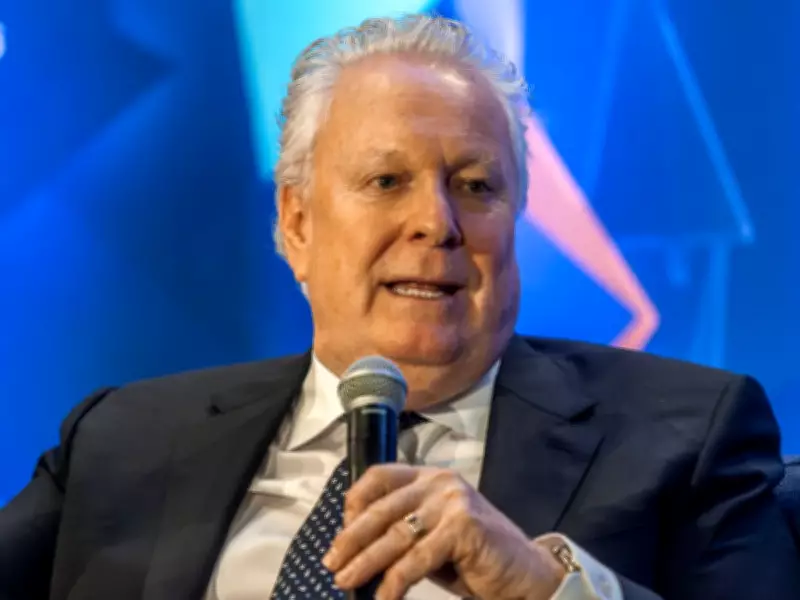
Jean Charest, a member of Prime Minister Mark Carney's advisory committee on U.S. trade relations, has revealed that the Trump administration is demanding concessions from Canada before it will engage in serious negotiations on the Canada-U.S.-Mexico Agreement (CUSMA). The remarks come as the scheduled July 1 review date for the North American trade deal approaches.
U.S. Seeks 'Entry Fee' for Formal Talks
Charest, also Quebec's former premier, told Bloomberg News that the U.S. is effectively asking for an 'entry fee' from Canada. This includes addressing long-standing complaints about market access for American dairy products and provincial bans on the sale of U.S. alcoholic beverages, which were imposed in response to U.S. tariffs.
In Washington, U.S. Trade Representative Jamieson Greer told Congress on Wednesday that 'if we can get some changes in Canadian trade practices it's going to help me get over the political hump we face here in the U.S.' He also warned that 'there may have to be an enforcement action to deal with' the alcohol bans.

Canada's Position: Reciprocity Needed
Canada's new chief trade negotiator with the U.S. stated Tuesday that Canada has already made 'significant' concessions and is now seeking reciprocity from Washington. Charest echoed this, emphasizing that trade negotiations should be a two-way street. 'If they want to engage at that level and in those conditions, they should also give us some movement on the special tariffs that they've put on steel, aluminum and softwood lumber,' he said.
Charest noted that Canada is not inclined to engage in one-sided negotiations, recalling past experiences where the U.S. demanded concessions without offering any in return. 'We've played in this movie before where it's all give and it's all take, no give, and we're not inclined to engage in those conditions,' he added.
Alcohol Bans as a Key Issue
The U.S. has specifically targeted provincial bans on American alcoholic beverages, which were enacted as retaliation for U.S. tariffs. Charest acknowledged that lifting these bans is not straightforward, as it falls under the competency of provincial and territorial governments. However, he expressed a willingness to work constructively. 'We want to work in a constructive way. We're not looking for areas of disagreement. What we are looking for is real engagement and negotiations that would be beneficial to both sides,' he said.
When asked if moving on American booze would open the door for U.S. negotiations, Charest replied, 'No one can say that for sure, but we continue to talk.' He confirmed that Canadian officials, including Trade Minister Dominic LeBlanc and chief negotiator Janice Charette, maintain direct communication with Jamieson Greer.
Timing and Next Steps
Charest suggested that Canada may not be in a rush to return to the negotiating table, as both sides continue informal discussions. 'At one point, we'll sit down and have a conversation or have maybe a little more formal conversation, and we're preparing for that moment,' he concluded.