As the global trade war initiated by former U.S. President Donald Trump approaches its one-year mark, few places have borne the brunt as immediately and severely as Windsor, Ontario. The city, a vital nexus in North America's automotive industry, experienced the economic shockwaves from the very first tariff announcements in early 2025.
A Familial Bond Fractured at the Border
The situation was described by local business leaders as a profound betrayal. Ryan Donally, president and CEO of the Windsor-Essex Regional Chamber of Commerce, likened the impact to a deep personal breach. "It was like your best friend betraying you," he stated, emphasizing the unique relationship between Windsor and its neighbour, Detroit. "We've got this beautiful waterfront that looks over Detroit. It's essentially big brother, little brother cities here, you know, familial cities."
This cross-border kinship made Windsor a symbolic and practical focal point. The city, where hundreds of millions of dollars in trade cross daily, found itself thrust into the international spotlight. Donally noted that the world watched and questioned: "If they can treat Canada this way—their closest friend and ally, No. 1 trading partner—what could they do to us? Or what will they do to us?"

A Timeline of Tariffs and Turmoil
The economic assault began swiftly after Trump's inauguration in January 2025. In February, he signed an executive order that led to a sweeping 25 per cent tariff on all Canadian imports, effective March 4. While amendments later exempted products compliant with the Canada-United States-Mexico Agreement (CUSMA), the uncertainty was crippling.
The volatility only intensified. By April, Trump threatened a 25 per cent tariff on foreign automobiles and auto parts, later narrowing it to non-CUSMA compliant goods. In June, he took aim at steel and aluminum, doubling an existing tariff to a punishing 50 per cent.
"It was chaotic," recalled Flavio Volpe, president of the Automotive Parts Manufacturers' Association. "The markets were up and down three, four or five points a day. Automotive stocks took double-digit hits… The first part of this year was extreme volatility."
Political Ground Zero at the Ambassador Bridge
The foot of the Ambassador Bridge, with the Detroit skyline as a backdrop, became the stage for Canada's political response. It was here that Prime Minister Mark Carney, then Federal Liberal Leader, warned of economies under threat just days ahead of the federal election he would win—a campaign largely fought over who was best-suited to confront Trump.
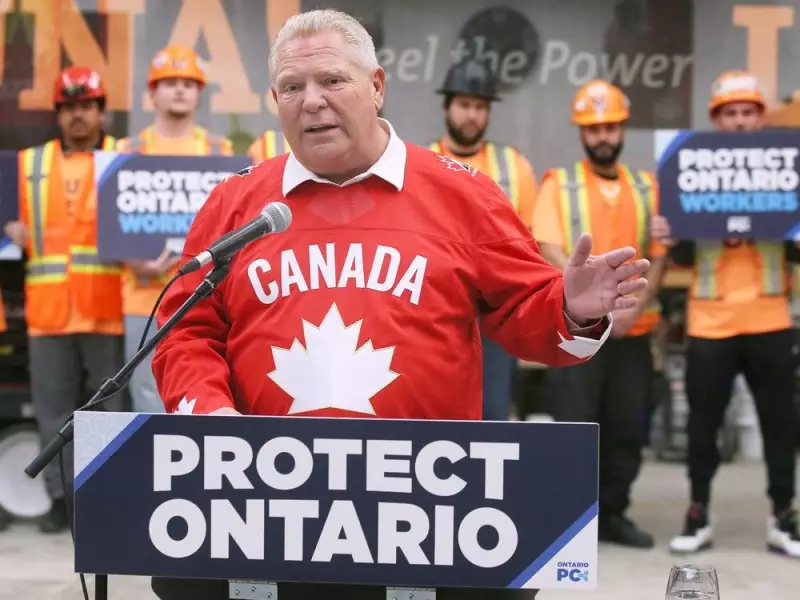
Similarly, Ontario Premier Doug Ford launched a snap campaign at the LiUNA 625 Training Centre in Windsor on February 26, 2025, positioning himself as Canada's defender against the U.S. tariffs. The location was chosen deliberately, a visual representation of the crisis at the nation's most critical trade corridor.
Donally reflected on the symbolism: "This was a visual representation of Trump and his entire regime. Visually, it could be focused here in Windsor." The events underscored what many termed a tremendously damaged longtime relationship between the two nations.
One year on, the community of Windsor serves as a stark case study in how geopolitical shifts can devastate local economies built on integrated supply chains and cross-border trust. The anniversary is not a celebration but a reminder of the fragility of even the closest international partnerships when faced with protectionist policies.