A new comprehensive survey has uncovered a powerful yet underutilized tool in Canada's competitive job market: employee referrals. According to research from Express Employment Professionals and Harris Poll, referrals significantly boost hiring efficiency and candidate trust, but most job seekers are failing to leverage this advantage.
The Power of Personal Endorsements
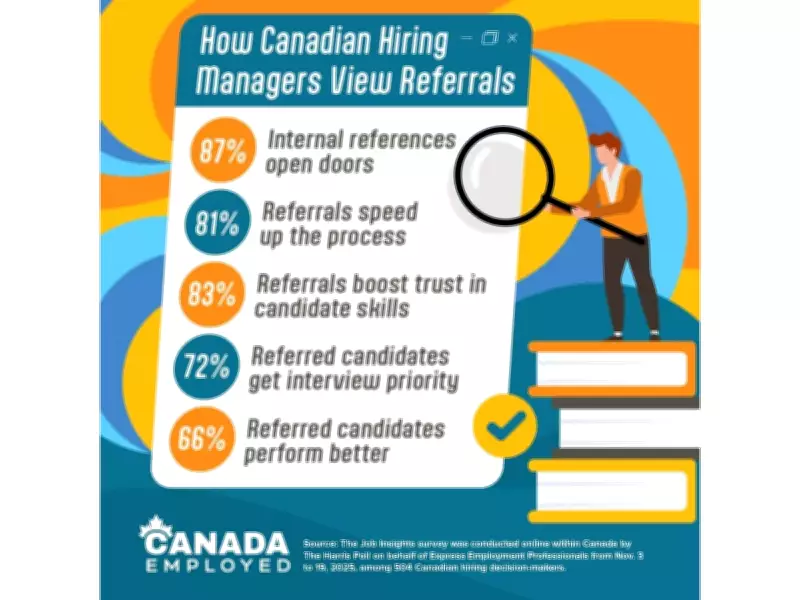
The survey reveals that an overwhelming 81% of Canadian hiring managers report that employee referrals make their hiring processes more efficient. Even more striking, 87% acknowledge that a strong internal reference can open doors that would otherwise remain closed to candidates. In today's crowded labor market, where countless applications flood every posting, a single personal endorsement can mean the difference between being noticed and being overlooked entirely.
How Referrals Transform Candidate Perception
A referral does far more than simply increase a candidate's visibility. It fundamentally alters how hiring managers evaluate potential employees:

- 83% of hiring managers trust a candidate's stated skills more when someone recommends them
- 72% prioritize interviewing referred candidates over equally qualified non-referred applicants
- 66% believe referred candidates perform better on the job once hired
"In a competitive employment landscape, personal endorsements create immediate credibility that resumes alone cannot match," the report indicates.
The Referral Disconnect
Despite the clear advantages documented by hiring managers, most job seekers dramatically underestimate the power of referrals. Only 38% believe that a referral helps them stand out from other candidates, revealing a significant perception gap between those doing the hiring and those seeking employment.
This disconnect suggests that many qualified candidates may be missing opportunities simply because they don't recognize the value of cultivating professional relationships that could lead to meaningful endorsements.
Authenticity Matters in Referrals
Hiring managers emphasize that not all referrals carry equal weight. The survey reveals important nuances about what makes an endorsement effective:
- 61% have been contacted by former colleagues for references after long periods of no communication
- 54% are less likely to provide a reference if someone only reaches out when they need something
- 54% consider whether the person maintained the relationship over years before agreeing to help
"The power of a referral doesn't begin when a candidate needs a job," the report notes. "It begins long before that through trust, history and genuine connection."
Realistic Boundaries of Referrals
While hiring managers acknowledge the value of referrals, they maintain realistic expectations about their limitations:
- 94% say a reference doesn't automatically mean the candidate is the right fit for the position
- 61% worry that relying too heavily on referrals can limit team diversity
"Referrals open doors, but they don't replace a true assessment of skills, culture or potential," the survey concludes. "They accelerate opportunity, not guarantee it."
Expert Insight on Relationship-Based Hiring
Bob Funk Jr., CEO, President and Chairman of Express Employment International, commented on the findings: "Referrals have always carried weight, but what this data shows is that they carry responsibility too. The strongest recommendations come from relationships built on consistency and genuine connection, not convenience."
Funk emphasized the human element in modern hiring: "When people invest in each other over time, they create opportunities that no algorithm can match. A referral isn't just a name on an email. It's trust earned through showing up. That's what moves careers forward."
The survey results suggest that both employers and job seekers could benefit from better understanding the dynamics of referral-based hiring. For companies, it represents an efficient recruitment tool. For candidates, it highlights the importance of maintaining authentic professional relationships throughout one's career, not just when employment is needed.