Canadian steel magnate Barry Zekelman has distributed $10,000 in rewards through his controversial whistleblower program that targets contractors using foreign steel on publicly funded projects across Canada. The initiative, known as the Buy Canadian campaign, has already verified ten separate tips since launching two weeks ago.
The Snitch Line That's Shaking Up Canadian Construction
Barry Zekelman, the Windsor-born billionaire CEO of Zekelman Industries, revealed that his company has begun sending out reward checks to individuals who provided verified evidence of foreign steel being used on government-funded construction projects. The program offers $1,000 for each confirmed tip through a dedicated reporting system at zekelman.com.
"Shine a light on the dirt, and everyone will see it," Zekelman told the Windsor Star, explaining his motivation behind the public campaign. After what he described as unsuccessful behind-the-scenes lobbying efforts, the steel executive decided to take a more aggressive approach to pressure government representatives into supporting domestic steel production.

Verified Projects and Local Impact
Among the projects where foreign steel has been confirmed are two local Southwest Ontario developments: the St. Clair Transmission Line and Amherstburg's new $11.3-million South Fire Station at Meloche Road and Simcoe Street. While Zekelman Industries verified that non-Canadian steel is being used for the firehall project, the exact country of origin hasn't been determined.
The company has also validated tips concerning three projects in British Columbia and one in Brantford. Zekelman indicated that his team is currently working to confirm additional reports beyond the initial ten verified cases.
Niacon, the Niagara Falls-based contractor responsible for the Amherstburg firehall project, declined to comment when contacted by the Windsor Star.
How the Verification Process Works
Zekelman Industries employs a rigorous verification process through its legal team to ensure the legitimacy of each tip. The procedure involves multiple steps:
- Confirming that the reported project receives government funding
- Requiring tipsters to submit personal information
- Examining photographic evidence of the construction site
- Verifying project names and locations
- Reviewing country-of-origin markers on steel products
"Anything coming into the country has to have a country-of-origin marker on it," explained Zekelman, whose company operates 15 steel manufacturing facilities in the United States, including Atlas Tube in Harrow.
The required evidence typically includes photographs of stamped or stickered markings that indicate where the steel was produced. This documentation is essential for the verification team to confirm that foreign steel is indeed being used on projects funded by Canadian taxpayers.
Political Context and Broader Implications
Zekelman didn't shy away from making political comparisons when discussing his campaign's objectives. "I wish Canada would do some of the same policies and fight for Canada like Trump fights for the U.S.," he stated, referencing the former American president's protectionist trade policies.
The steel executive believes that many politicians want to support domestic industry but lack awareness about the extent of foreign steel usage and how to effectively modify existing policies. His public campaign aims to create transparency and accountability around procurement practices for publicly funded infrastructure projects.
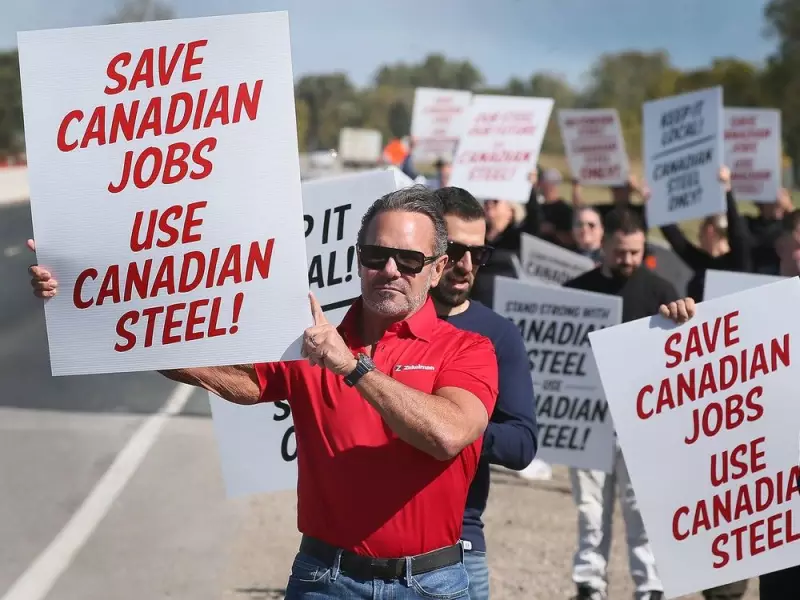
Zekelman Industries, which holds the distinction of being North America's largest independent steel pipe and tube manufacturer, has been actively involved in advocating for Canadian steel interests. The company participated in a rally with local steelworkers on October 10, 2025, at the intersection of E.C. Row Expressway and Banwell Road in Windsor, protesting the use of foreign steel in domestic projects.
As the Buy Canadian campaign continues to gain attention, the $10,000 in initial payouts represents just the beginning of what Zekelman hopes will be a broader movement toward supporting domestic steel production and protecting Canadian manufacturing jobs.