Federal Government Commits $700,000 to Windsor Manufacturer Amid Trade War
In a significant move to bolster Canadian industry during ongoing trade tensions, the federal government has announced an investment of up to $700,000 in Windsor-based NextGen Mold Technologies. The funding, unveiled on Friday, March 6, 2026, is part of Ottawa's broader strategy to support businesses impacted by tariffs and strengthen the auto sector.
Supporting Growth Despite Tariff Challenges
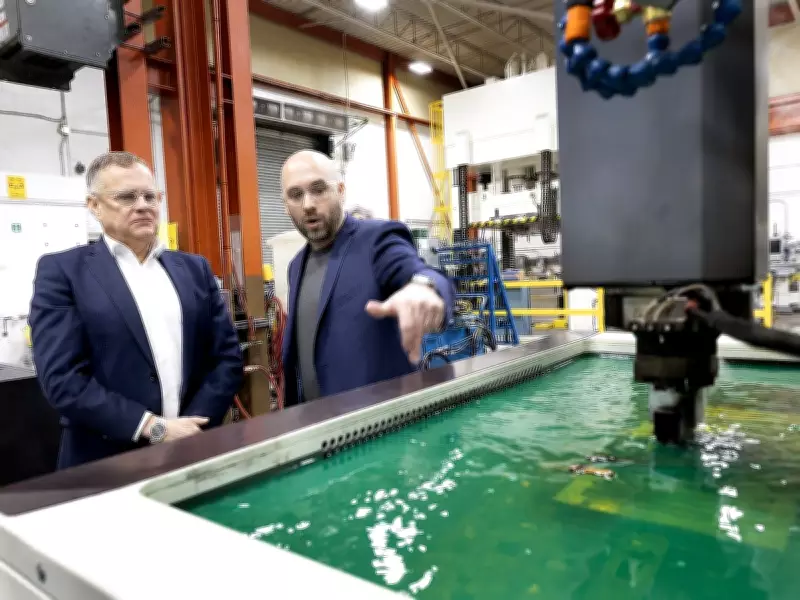
Wayne Long, Secretary of State for the Canada Revenue Agency and Financial Institutions, detailed the investment during a visit to the Windsor plant. He emphasized that the funds are allocated through the federal Regional Tariff Response Initiative (RTRI), designed to help companies reduce dependence on markets with high tariffs.
"One of the main objectives of the RTRI is to reduce exposure to and dependence on markets where, sadly, we face significant tariffs," Long stated. The investment aims to enhance production speed, lower long-term operating costs, and invest in labor expertise at NextGen.

NextGen's Remarkable Resilience
Founded in 2021, NextGen Mold Technologies specializes in manufacturing plastic injection and compression moulds. Despite the imposition of U.S. tariffs by the Trump administration in 2025, the company achieved a remarkable 66% growth over the past year. President Dennis Goggin described the initial impact as "scary" but highlighted the firm's swift adaptation.
"We reacted quickly and found new customers and new industries, allowing us to grow rather than shrink due to the tariffs and threats," Goggin explained. The company continues to export approximately 75% of its products to the United States, underscoring its reliance on the U.S. market.
Diversification and Future Prospects
Goggin noted that NextGen is actively diversifying beyond the automotive sector to mitigate risks. Currently, the company's work distribution includes:
- 65% in automotive parts
- 25% in aerospace
- 10% in consumer goods
He emphasized that aerospace and consumer goods are less cyclical than automotive, providing more stability. "It's almost recession-proof with goods and products," Goggin said, adding that this strategy ensures continuous capacity utilization for machines and personnel.
Expanding into New Markets
Looking ahead, NextGen is increasing its presence in the aerospace industries of Quebec and Ontario and pursuing certifications to compete for defence contracts as Ottawa boosts domestic spending in that sector. Additionally, the company is exploring opportunities in other markets, such as east-coast fisheries, which could benefit from plastic injection moulds for lobster traps.
This federal investment not only supports NextGen's expansion but also reflects a broader commitment to fostering Canadian manufacturing resilience in the face of global trade uncertainties.