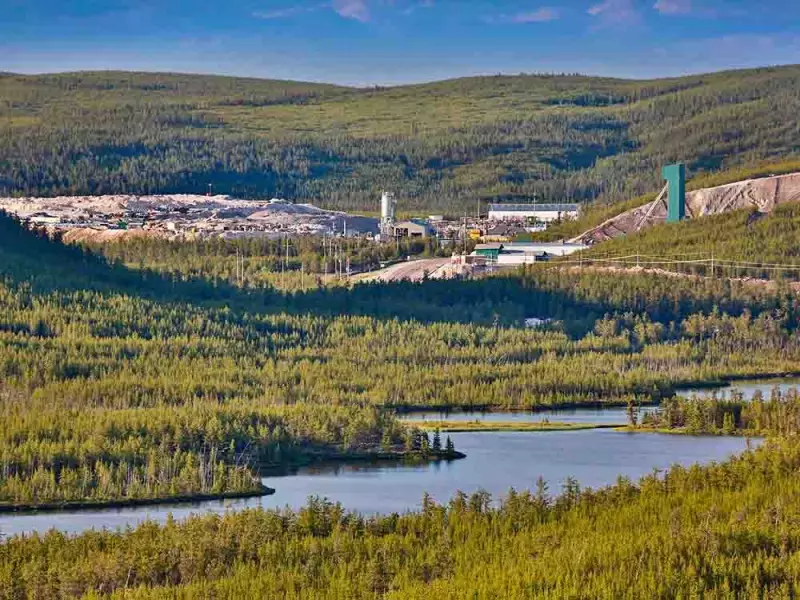
Canada's mining industry is experiencing an unprecedented boom, fueled by soaring global demand and record prices for commodities like gold, silver, and copper. However, this surge is now colliding with a severe and worsening shortage of skilled labour, threatening to delay vital projects and curb the sector's expansion.
Record Highs Meet a Critical Shortfall
Gustavo Jurado, a senior economist at the Mining Industry Human Resources Council, describes the current climate as "the hottest it's ever been." This intensity is reflected in the Bank of Canada's metals and minerals price index, which hit a record high of 1,093.9 in December 2023. Consequently, employment in mining and quarrying has climbed to a national record of approximately 100,000 workers, a figure roughly 20% higher than the previous peak.
The sector's unemployment rate sits at a razor-thin 2.6%, starkly lower than the national average of 6.8%. "Every mining operation is running at full cylinders; everyone's expanding, everyone's exploring and there's a lot of investment," Jurado stated. Yet, this very success has created a critical bottleneck: a desperate lack of qualified personnel, particularly in skilled trades such as mechanics and electricians.

Production Pauses and Project Delays
The labour crunch is already having tangible, costly effects on operations across the country. Jurado revealed that some mines have been forced to halt production entirely due to the absence of a single specialist. "We've heard of cases where a mine had to shut down because one mechanic was sick and they had to send everybody home for two weeks," he said.
Major companies are feeling the pressure. In the summer of 2023, Cameco Corp. announced that development delays—partly linked to labour shortages—would reduce its 2025 uranium production forecast for the McArthur River/Key Lake operations in Saskatchewan. The company now expects output of between 14 and 15 million pounds, down from an earlier projection of 18 million pounds.
In Eastern Canada, similar concerns are emerging. Kevin Bullock, CEO of NexGold Mining Corp., has expressed worry about finding the roughly 400 workers needed to build the proposed Goldboro mine project in Nova Scotia.
A Long-Term Challenge with Demographic Roots
To keep projects moving, many operators are increasingly relying on out-of-province labour, especially in provinces like Saskatchewan and British Columbia where local pools are insufficient. However, Jurado warns that the global energy transition will add immense pressure in the coming decades, as demand for critical minerals skyrockets and Canada positions itself as a key supplier.
"In the next 10 to 20 years, we're going to want to expand significantly, but we're going to come up against this labour constraint, which is already being felt," he cautioned. "And it's going to get worse."
Demographics are a core driver of this crisis. Approximately 20% of Canada's mining workforce is over the age of 55, meaning a wave of retirements will continue to drain experience from the sector. Compounding the problem, the industry struggles to attract younger workers to fill the looming void, setting the stage for a sustained challenge that could hamper one of Canada's most vital economic engines.