TORONTO – In a significant move for its flagship asset, Nobel Resources Corp. (TSX-V: NBLC) has announced the start of mobilization for its first-ever diamond drilling campaign at the Cuprita copper project, located in Chile's mineral-rich Antofagasta Region. Drilling operations are scheduled to begin the week of January 12, 2026, following the receipt of all necessary permits from local authorities.
A Major Step for an Untested Prospect
This initial drill program represents a pivotal moment for the project, as Nobel becomes the first company to ever test the Cuprita property with a drill bit. The company's technical team spent 2025 identifying what they describe as highly prospective near-surface copper targets within a large-scale, mineralized alteration system where copper minerals are visibly widespread in outcrop.
Larry Guy, Chairman and CEO of Nobel, expressed strong optimism about the program's launch. "This is a fabulous start to 2026 for the Company," Guy stated. He emphasized that Cuprita is an exciting copper prospect situated in one of Chile's most prolific copper mining districts, highlighting the untapped potential the company aims to unlock.

The Geological Promise of Cuprita
The Cuprita project is classified as a copper porphyry target, situated within northern Chile's Atacama region. It lies on the prolific Metallogenic Paleocene Porphyry Copper Belt, a trend that hosts major deposits like El Salvador, Spence, and Sierra Gorda. Nobel's geologists note that the project's structural setting—positioned on a major north-northeast trending corridor intersected by a northwest secondary structure—closely mirrors the geology of those world-class deposits to the north.
Fieldwork throughout 2025 yielded several encouraging indicators. Geologists identified a leach cap, which is a weathered surface layer often associated with underlying mineralized systems. Adjacent to this cap, a soil anomaly showed elevated levels of copper, lead, and zinc. Notably, soil copper values in much of the anomaly were found to be more than 300% above the expected background levels for the area.
Compelling Evidence for a Buried System
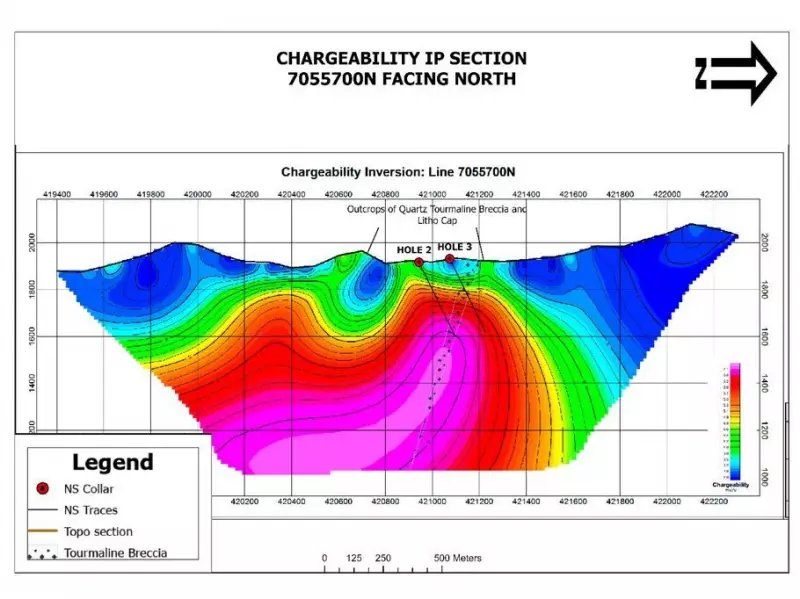
These surface features are further supported by geophysical data. The leach cap and soil anomaly coincide with a ground magnetic low, a common characteristic in the region where hydrothermal activity has altered magnetic minerals—a frequent signature of mineralized porphyry systems. The highest copper-in-soil values detected to date are located southeast of the outcropping leach cap.
The combination of these factors—the favorable structural location, the presence of a leach cap, strong soil geochemistry, and correlating geophysical signature—has led Nobel's team to conclude that the evidence is consistent with a potentially buried copper porphyry deposit. The commencement of drilling is the critical next step required to test this geological model at depth.
With mobilization underway, the mining and investment communities will be watching closely for the first results from this maiden drill program at Cuprita, which could validate the project's potential as a new discovery in a world-class copper jurisdiction.