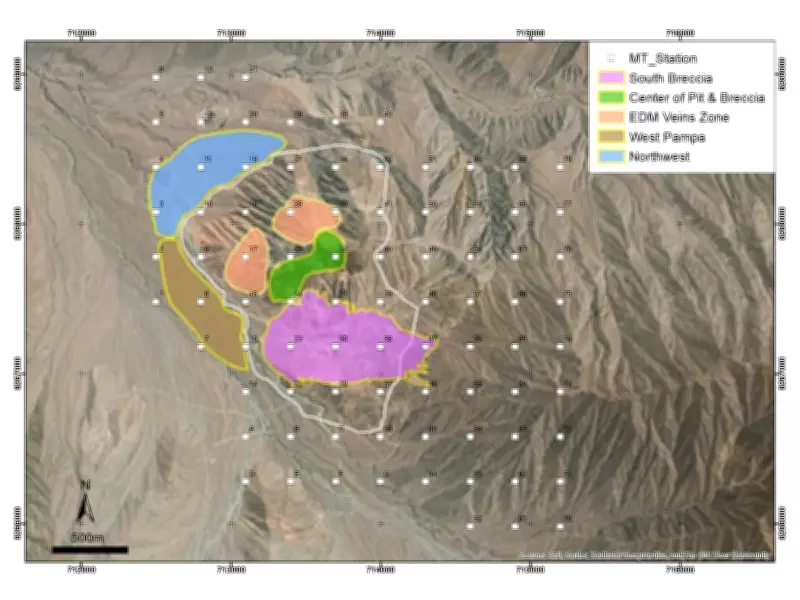
VANCOUVER, British Columbia – Pecoy Copper Corp., a mineral exploration company, has successfully concluded a comprehensive magnetotelluric survey at its fully owned Pecoy Copper-Gold-Molybdenum-Silver Project in southern Peru. This advanced geophysical initiative is designed to refine high-potential targets and support resource expansion efforts, particularly in areas with concealed mineralization.
Strategic Survey Objectives
The magnetotelluric survey, covering approximately 760 hectares over the Pecoy system, involved 85 stations to create a high-resolution 3D resistivity model. Key goals include de-risking exploration by defining the geometry of known mineralized zones, identifying new targets such as hidden porphyry centers, and optimizing capital allocation through integration with ongoing drilling and geochemical data.
Enhancing Geological Understanding
By mapping subsurface resistivity variations to depths exceeding 2,000 metres, the survey aims to improve the company's 3D geological model and understanding of alteration and structural architecture. This data-driven approach is expected to increase the precision of future step-out drilling and potentially uncover additional high-grade mineralization.

Leadership Insights
Vincent Metcalfe, President and CEO of Pecoy Copper, emphasized the project's significance, stating, "Pecoy already hosts one of the largest undeveloped copper resources in Peru, yet the system remains open at depth and along strike. The MT survey is crucial for refining our understanding of the broader porphyry system and prioritizing concealed targets to unlock district-scale potential."
Future Plans and Timeline
Final inversion and interpretation of the survey data are anticipated in the second quarter of 2026. These results will inform upcoming drilling campaigns and long-term exploration strategies, supporting the company's efforts to expand its resource base in a key mining region.