AI Revolutionizes Home Construction Amid Market Challenges
Tough market conditions are pushing homebuilders out of their comfort zones, driving a significant shift toward implementing artificial intelligence in the construction process. This technological adoption aims to deliver homes more efficiently and affordably, marking a pivotal moment for the industry.
Historical Resistance to Technological Change
About two decades ago, the homebuilding industry was resistant to technological advancements, recalls Taylor Rogers, project director at real estate developer Dunpar Homes. At that time, it was common for trades to send faxes on job sites, and many professionals pushed back against using email. "Site supers and trade partners were very apprehensive about using a new technology," said Rogers, who supervised construction sites during that era.
While emails and smartphones have since become standard tools, Rogers notes that similar opposition persists today regarding artificial intelligence. However, signs indicate that this resistance may be waning as the industry approaches an inflection point with AI.

Current AI Adoption in Homebuilding
Despite lagging uptake, some Greater Toronto Area developers are already embracing AI. Dunpar Homes, for instance, uses Togal.AI at its Lambton Towns townhouse project on St. Clair Avenue West in Toronto. This tool quickly scans floorplans to determine material requirements, such as the exact number of tiles needed, reducing hours of manual calculations to minutes. "It gets rid of all that manual estimating that we would do," Rogers explained, emphasizing that AI helps control costs by minimizing waste.
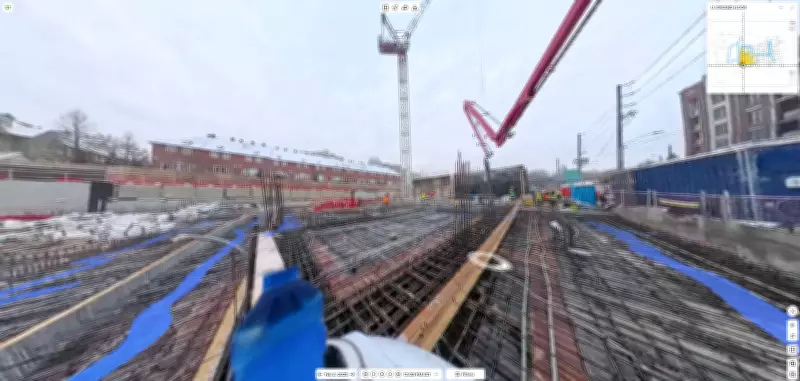
At another Dunpar project, the 26 Earlington luxury-apartment building, the developer employs OpenSpace AI. This technology uses cameras mounted on hardhats to create real-time 3D scans of building interiors, similar to Google Maps for indoor spaces. These scans help resolve disputes and save significant costs, with Rogers stating, "It's been a great tool that's saved us tens of thousands of dollars." Additionally, drones capture aerial scans to calculate precise material needs, such as dirt for filling holes.
Market Conditions Driving AI Implementation
Nolan Frazier, head of sales in Canada for Procore Technologies, a construction-management software company, suggests that tough market conditions have incentivized developers to adopt AI. "I think for a lot of these developers and builders, there wasn't an impetus for the change," he said. "The market was good, results were good, and things were growing, but I think now that the rug's kind of been pulled out from under them, there have been some foundational changes."
Frazier reports that AI adoption among Procore's approximately 500 real estate developer clients has surged from 5-10% last year to 40-50% recently. He attributes this increase to structural issues in construction, including labor shortages and rising costs. "AI helps you really start to do more with less," Frazier noted, suggesting potential savings for homebuyers.
In-House AI Development by Builders
Some developers are creating custom AI solutions to address specific challenges. Brightstone Developments, for example, began exploring AI integration in late 2024 to manage planning policy changes in Ontario. The company developed an AI that scans the internet for provincial, regional, and municipal planning documents, providing daily summaries. "It's tracking those things just like an urban planner would or a municipal lawyer would," explained Noah Shechtman, director of Development at Brightstone.
Shechtman estimates that this AI saves thousands of hours and helps avoid costly delays from unexpected policy shifts. In response, Brightstone created a head of innovation role last year to lead future tech initiatives. "We have to be using anything we can... especially because we're in a housing crisis," Shechtman emphasized.

Future Outlook for AI in Construction
The trend toward AI adoption in homebuilding is expected to continue as developers seek competitive advantages. Rogers predicts, "At the end of the day, email took over, and AI is going to take over, too. You can be an early adopter, or you can be late to the party." With tools enhancing efficiency, reducing waste, and cutting costs, AI is poised to transform the industry, potentially making homes more affordable in the process.
As market pressures persist, more builders are likely to follow suit, integrating AI into their workflows to navigate challenges and capitalize on opportunities in the evolving real estate landscape.