British Columbia is facing a profound property rights crisis that threatens the very foundation of land ownership in the province. Recent court decisions and government policies have created unprecedented uncertainty for property owners and developers alike.
The Richmond Ruling That Changed Everything
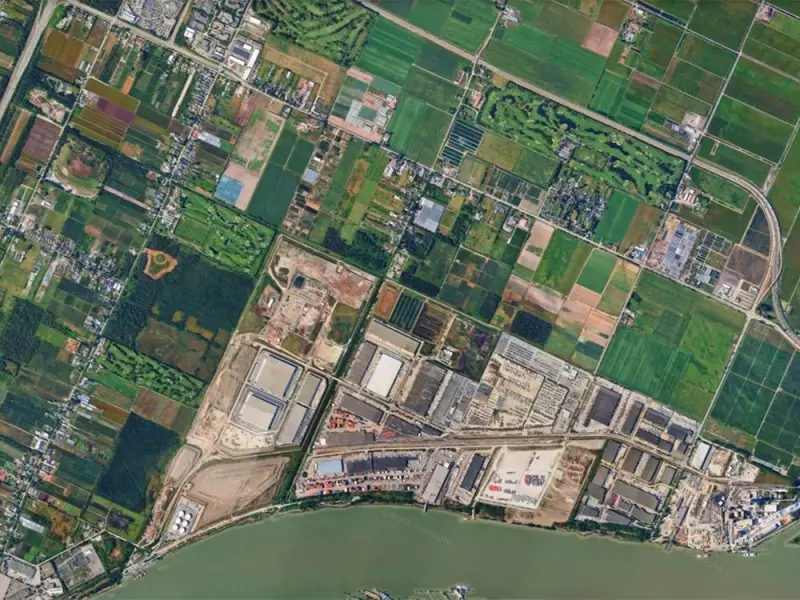
The B.C. Supreme Court recently made a landmark declaration that Aboriginal title exists on 800 acres of land in Richmond, a suburban area of Vancouver. In what many legal experts consider a groundbreaking decision, the court stated that Aboriginal title holds "senior and prior" status compared to fee simple interests. This ruling has sent shockwaves through the property sector and prompted increased scrutiny of similar claims across the province.
Other significant Aboriginal title claims are now receiving heightened attention, including cases affecting Kamloops and the Sun Peaks ski resort. Meanwhile, the provincial government continues to negotiate agreements that transfer control over land use, such as recent deals on Haida Gwaii that further complicate the property landscape.

Constitutional Roots of the Crisis
The origins of this crisis trace back to Canada's constitutional framework. When the country adopted its new constitution in 1982, the framers deliberately excluded rights to private property. However, in a last-minute addition, they guaranteed existing Aboriginal rights and title.
Over subsequent decades, the Supreme Court of Canada has progressively expanded the scope of these rights. The recent Richmond decision represents the culmination of this judicial evolution. Although the ruling is currently under appeal to the B.C. Court of Appeal, a final resolution from the Supreme Court of Canada could take years.
Government Policies Intensify the Situation
The judicial developments are only part of the story. In 2015, the Trudeau government committed to implementing the United Nations Declaration on the Rights of Indigenous Peoples (UNDRIP). This declaration asserts that Aboriginal groups have the right to own, use, develop and control lands they traditionally occupied or used.
British Columbia took this commitment further in 2019 by incorporating UNDRIP into provincial law through legislation known as DRIPA. This statute requires all B.C. laws to be consistent with UNDRIP principles. The current NDP government has been actively granting Aboriginal title and control across the province in accordance with this framework.
A Potential Constitutional Solution
Addressing this complex situation presents significant constitutional challenges. Repealing the section on Aboriginal rights or adding private property guarantees to the Charter would be nearly impossible under Canada's demanding amending formula.
However, University of Saskatchewan law professor Dwight Newman has proposed an innovative alternative. He suggests using Section 43 of the constitution, which permits amendments that apply to one or more, but not all, provinces. The process requires only that the affected provincial legislature and federal Parliament both pass resolutions supporting the amendment.
This approach has precedent, having been used to alter constitutional denominational school rights in Quebec and Newfoundland, and to add linguistic rights provisions in New Brunswick in 1993. Professor Newman suggests that a Section 43 resolution could specifically guarantee that private property in British Columbia maintains priority over Aboriginal title.
As British Columbia grapples with this escalating property rights crisis, all eyes remain on the appellate courts and legislative bodies that may ultimately determine the future of land ownership in the province.