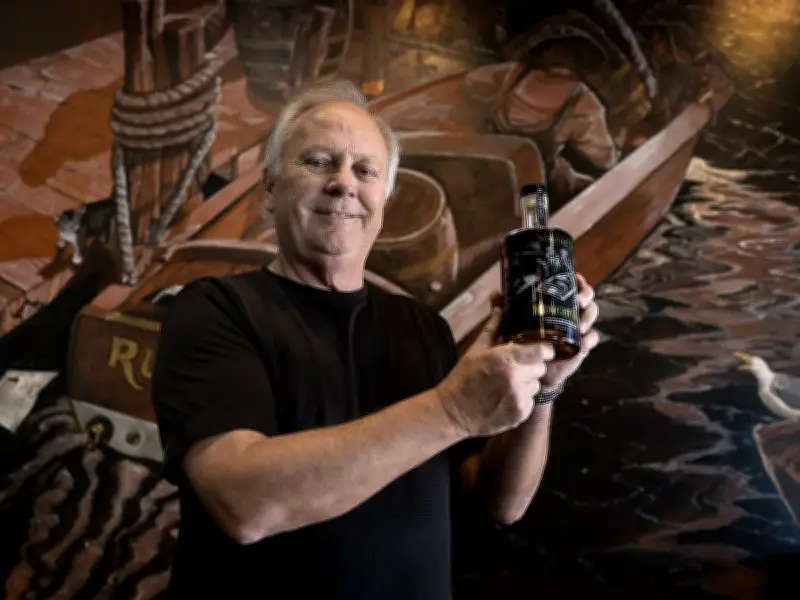
As American bourbon disappeared from liquor store shelves at the onset of Canada's tariff wars with the U.S., a steady stream of customers began pressing Wolfhead Distillery for a local alternative.
Customer Demand Sparks Innovation
Visitors to the retail shop, nestled in the southwestern Ontario community of Amherstburg, kept asking the same question: Why don't you make your own bourbon? There were emails, phone calls and requests from people sidled up at the restaurant bar. Owner Tom Manherz went to his head distiller with the challenge. Their response six months later is a Canadian-style bourbon blend launched last week. And he's not alone.
The vanishing of American bourbon from liquor store shelves during the Canada-U.S. trade dispute created an opening many Canadian distillers had never seen before, say industry experts. Suddenly there was literal shelf space in stores and a large, motivated customer base looking for domestic options.

Industry-Wide Impact
Some distilleries have been making whisky-bourbon blends long before the trade wars began, while others have actually made a bourbon-style whisky here in Canada. But the latest void in the market created a demand that spiked Canadian craft spirits sales by more than half and spurred the creation of more brands, according to the Canadian Craft Distillers Alliance.
“You listen to what people want, right?” said Manherz, just days before he launched his Midnight Run, a Canadian whisky blended with American bourbon. “You find a need and you fill it. That's basically what we did.”
Regulatory Hurdles
Creating bourbon-esque whisky in Canada also means coming up with the right classification, Manherz explained. Under U.S. law, bourbon can only be made in the United States and must follow strict production rules, including being distilled from a mash bill of at least 51 per cent corn and aged in new, charred white-oak barrels. That means Canadian distillers can produce whisky using similar methods, but they cannot legally label it bourbon.
Manherz imports bourbon from the U.S., blending it with Canadian whisky for a final product that gives drinkers that familiar profile they've been missing, he explained. He and his team tested his blend at various alcohol content levels, ranging from 40 per cent alcohol to 58 per cent. Bourbon typically having a higher alcohol content, most of the taste tests favoured the 48 per cent, according to Manherz.
“People liked the 48, and the 58, but I think there's a bigger crowd for the 48 (per cent),” he said. “I don't know how big that market is for the 58.”
Similar Strategies Elsewhere
Similar to Wolfhead, the owner of Maverick Distillery in Oakville, Ont. has long used bourbon aged in the U.S. as part of his whisky blends in Canada. Craig Peters has a Barnburner line of whisky that features bourbon blends, including his Barnburner Union Whisky, which he makes by buying bourbon from Kentucky and blending it with Canadian whisky. As popular as that product was, he took an even bolder step when U.S. spirits were banned in many parts of the country.