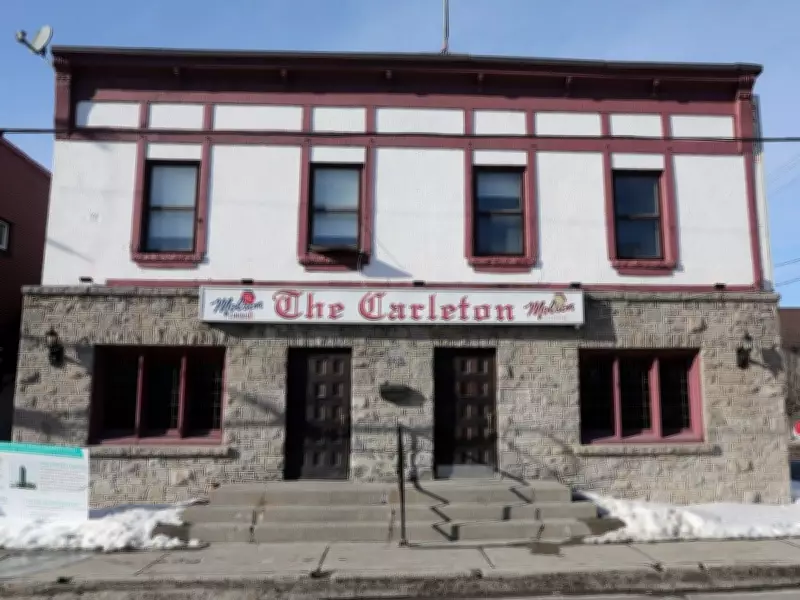
Let the Carleton Tavern Die a Dignified Death, Not a Hipster Reimagining
In a heartfelt opinion piece, Ottawa writer Brigitte Pellerin makes a passionate plea to let the historic Carleton Tavern meet its end with dignity rather than be "reimagined" into a sanitized, upscale version of itself. As the Hintonburg area undergoes redevelopment, Pellerin argues that the tavern's authentic, unpretentious character should be remembered, not reconstructed.
The Inevitable Demolition and a Controversial Rebuild Plan
The Carleton Tavern, located on Parkdale Avenue between Oxford and Armstrong Streets, is slated for demolition to make way for a new 38-storey mixed-use building. The developer, Taggart, cites the building's age, general decrepitude, and the relentless passage of time as reasons for its removal. A consultant report has proposed rebuilding the tavern "using high-quality stone and masonry to restore its familiar presence on Parkdale Avenue."
Pellerin responds with a firm rejection of this idea. "Uh, no thank you. If I wanted high-quality stone or masonry or furniture or grub, I wouldn't go to the Carleton," they write. The columnist emphasizes that the tavern's appeal lies precisely in its lack of pretension—its authentic tavern ambience, which is decidedly not about high-quality anything.

A Nostalgic Defense of Authentic Tavern Culture
Reflecting on personal memories, Pellerin recalls a time when taverns were simple, no-frills establishments. "In the taverns of my misspent youth, there was a salt shaker on each table because the beer was so bland you had to add flavour to it. And you never ordered just one beer. They always came in two. Food was … whatever rancid peanuts the owner felt his customers deserved," they reminisce.
Today, while the Carleton has evolved to offer solidly mediocre food and very tolerable beer—like the CT Pilsner sold at reasonable prices, such as $11.99 for a personal pitcher—it retains that essential, welcoming vibe. Pellerin highlights the tavern's inclusive atmosphere, where patrons can wear a holey writing hoodie without judgment, unlike in finer establishments where such attire might draw side eyes.
Questioning the Developer's "Reimagined" Vision
The developer's report further describes plans to re-establish the prominent corner facade while reimagining the northern portion as a contemporary extension for "improved activation, increased transparency, and opportunities for public art." Pellerin expresses bewilderment at this jargon, asking, "What in tarnation is improved activation? It doesn't say tavern at all, not even the heavily reimagined kind."
Built in the late 1890s and serving as a watering hole for nearly a century after a brief stint as a general store, the Carleton Tavern holds significant historical value. However, Pellerin believes it's time to let it go rather than transform it into something it never was. "I am sad to lose such a historic institution. But I want to remember it for what it was, not some reimagined hipster version of it," they assert.
A Call for Respectful Farewell
In conclusion, Pellerin urges the community to honor the Carleton Tavern's legacy by allowing it to die a dignified death. The columnist's argument centers on preserving the memory of an authentic piece of Ottawa's cultural fabric, one that valued camaraderie and simplicity over high-quality aesthetics. As redevelopment progresses, this opinion piece serves as a poignant reminder of what can be lost when historic spaces are modernized beyond recognition.